

This bathroom remodeling guide walks you through every step, from the first idea to the final caulk line. A remodel goes much more smoothly when you know what’s coming. You can plan your budget, make choices on time and spot problems before they cost you.
Quick answer: A bathroom remodel follows 10 basic steps. You set goals, set a budget, choose the scope, make selections and handle permits. Then the work moves through demolition, rough-in, waterproofing, finishes and a final walkthrough.
We’ve been remodeling bathrooms across Knoxville and East Tennessee since 1997. The steps below are the same ones we walk homeowners through at the kitchen table during a free estimate.
Starting a Bathroom Remodel?
Get a free, no-obligation bathroom estimate from American Home.
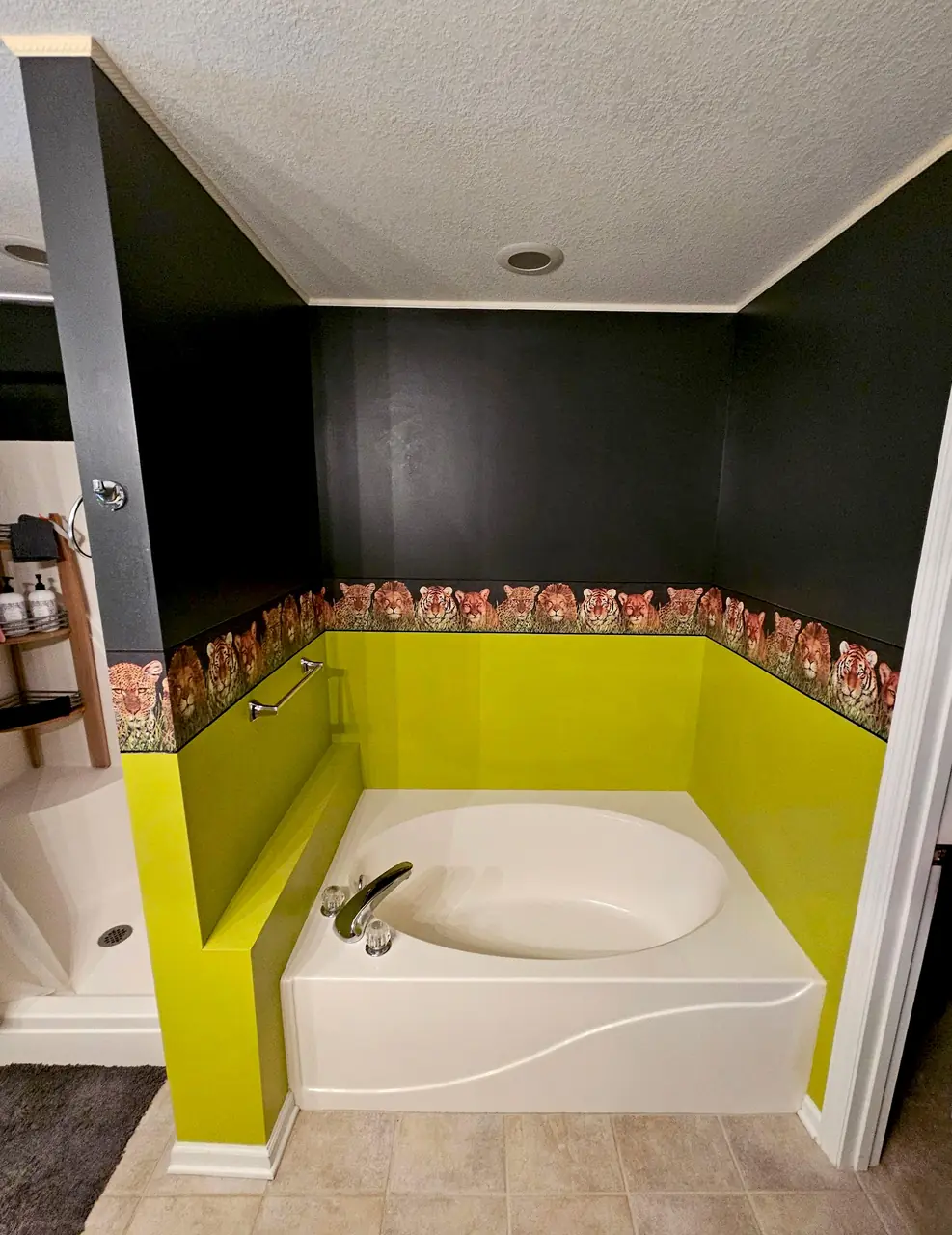
Before: a dated bathroom with a rarely used garden tub.
How to Use This Bathroom Remodeling Guide
The first five steps happen before anyone picks up a hammer. They’re the planning phase, and they shape everything that follows. The last five steps are the construction phase. That’s when the old room comes out and the new one goes in.
You don’t need to memorize every detail. Use this bathroom remodeling guide as a map. Read the planning steps closely, since that’s where your choices matter most. Skim the construction steps so you know what to expect and what questions to ask your contractor along the way.
The Planning Phase: Steps 1 to 5
Good planning saves money, and it is the heart of any bathroom remodeling guide. Most delays and surprise costs trace back to choices made late or not at all. Taking time here keeps the work moving once it starts. It also helps you compare estimates fairly, since every contractor will be pricing the same plan.
Step 1: Define Your Goals
Start with what isn’t working. Maybe there’s too little storage. Maybe you have a tub you never use, or a shower that’s hard to step into. Maybe the finishes just look dated. Write down every complaint, big or small. That list is the starting point for the rest of this bathroom remodeling guide.
Your answers decide what kind of project you need. A few cosmetic gripes point to a refresh. An unused tub points to a tub-to-shower conversion. Leaks, soft floors or a layout that doesn’t work point to a full remodel. Knowing this early keeps the rest of the plan focused.
Step 2: Set Your Budget
Decide on a comfortable price range before you shop. Keep a cushion for surprises, especially in older homes. The biggest cost drivers are moving plumbing, custom tile work and high-end fixtures. Keeping the same layout is often the easiest way to control cost.
Our remodeling cost calculator can give you a rough starting point. Ask about financing options, too. For qualified homeowners, financing can let you include the features that matter instead of cutting them to fit the budget.
Step 3: Choose the Scope
Scope means how much of the room you’ll change. Most projects fall into one of four levels:
- Refresh: paint, lighting, fixtures, mirror and accessories.
- Tub or shower replacement: an acrylic system or new walk-in shower in the same footprint.
- Full remodel: new shower or tub, vanity, flooring, lighting and ventilation.
- Layout change: moving fixtures or walls for a new floor plan.
Each level up adds time and cost. Pick the one that solves the problems on your list from Step 1.
Step 4: Make Your Design Selections
Now choose the details. That includes the shower or tub style, the wall finish (tile or acrylic panels), the vanity and top, faucets, lighting, flooring and accessories. Look at samples in your own bathroom light, since colors can shift a lot from the showroom.
A key rule in any bathroom remodeling guide is to make every selection before work starts. That way materials are on hand when the crew needs them, and the job doesn’t stall. If you want ideas, see our posts on modern bathroom design and dream bathroom ideas.
Step 5: Handle Permits and Scheduling
Plumbing and electrical work often need permits. Rules vary by city and county, so ask your contractor what your project requires. A good contractor will handle the permits and know which office to work with.
Your contractor should also give you a schedule for each phase. Ask when demolition starts, when inspections happen and when you’ll have a working bathroom again. If you only have one bathroom, plan ahead for that stretch. This bathroom remodeling guide can’t predict your exact dates, but a clear schedule up front helps.
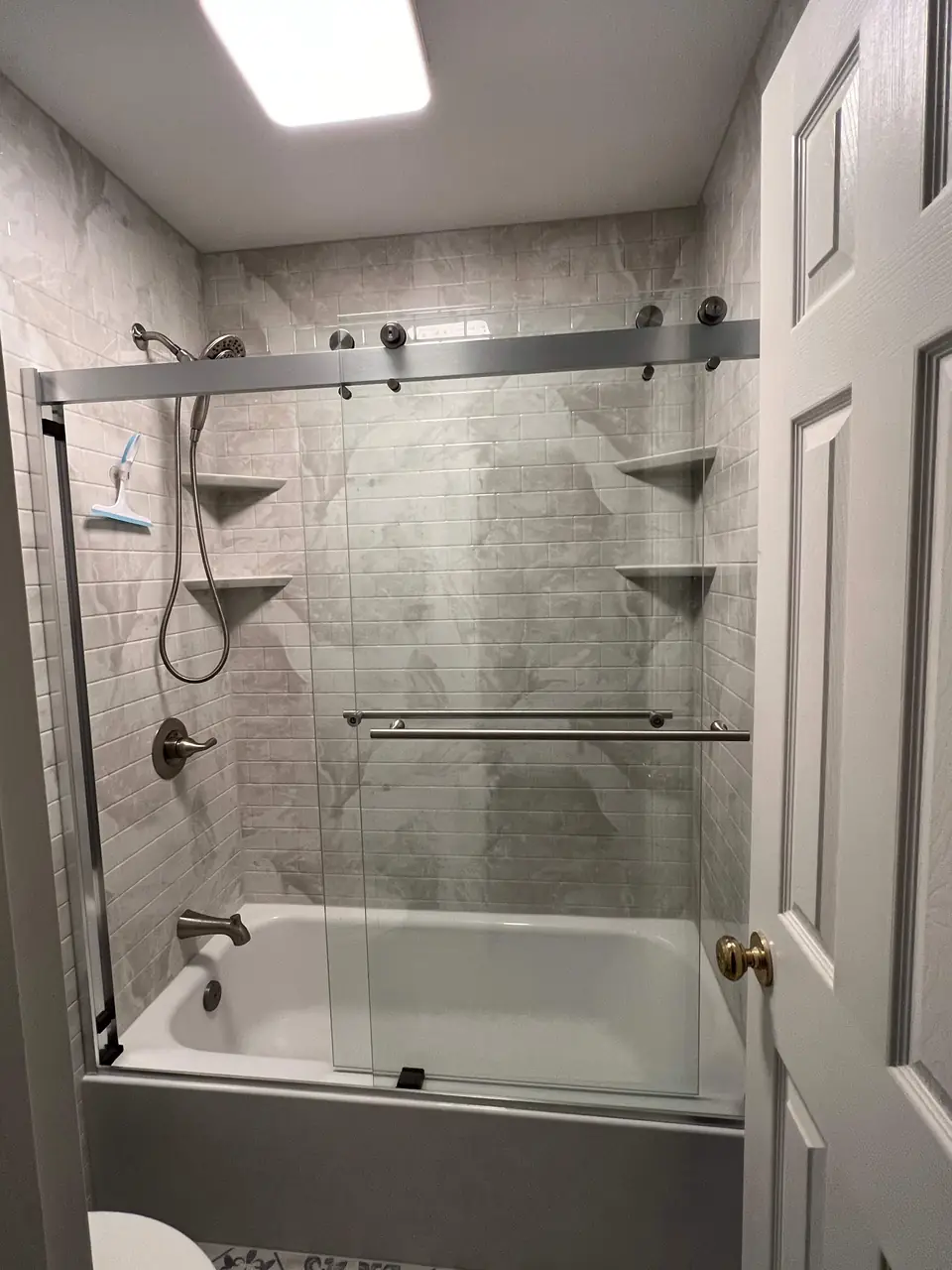
After: a new tub-shower with wall panels and glass doors.
The Construction Phase: Steps 6 to 10
Once planning is done, the real work begins. This part of the bathroom remodeling guide covers what happens inside the room. Some steps go fast. Others, like waterproofing and tile, take time for good reason. Knowing the order helps you understand why the crew does what they do.
Step 6: Demolition
Old fixtures, tub surrounds, vanity and flooring come out. The crew protects nearby floors and hallways from dust and debris. This step is loud but usually quick.
Demolition is also when hidden problems show up. Water damage, rotted subfloor, mold or old plumbing are common finds in older homes. They get fixed now, before new materials go in. That’s exactly why you keep a cushion in your budget.
Step 7: Rough-In Work
Rough-in is the behind-the-walls work. Plumbing and electrical lines are updated or moved. New shower valves and drains go in. The exhaust fan is installed and vented outdoors, not into the attic.
If you’re adding heated floors, a new light, an outlet in a drawer or blocking for grab bars, this is the time. Blocking is extra wood in the wall that holds weight. Inspections often happen after rough-in, before the walls are closed.
Step 8: Waterproofing and Walls
Shower walls and pans are waterproofed, then finished with tile or wall panels. This step decides how long your shower lasts. A small gap can let water into the wall, where it rots wood and grows mold out of sight.
Moisture is a big deal in our humid climate. The EPA’s guide to mold and moisture explains why keeping water out matters. Acrylic wall systems, like the Bath Planet systems we install, have fewer seams and no grout lines, which leaves fewer places for leaks.
Step 9: Flooring, Vanity and Fixtures
Flooring goes down first, usually tile or waterproof luxury vinyl plank. Then the vanity, top, sink and toilet go in. Faucets, shower glass and light fixtures follow. See your floor choices on our flooring installation page.
This is when the room starts to look finished. Check that drawers open fully, the toilet doesn’t rock and the shower door closes smoothly. Small fixes are easy now.
Step 10: Final Details and Walkthrough
Paint, trim, mirrors, towel bars and caulk finish the room. Then you walk through everything with your contractor. Turn on every faucet, run the shower, flip every switch and test the fan.
Make a list of anything that needs a touch-up. A good contractor will want to fix it before closing the project. Ask for care instructions for your new shower, floors and fixtures, and keep them with your home records.
How Long Does a Bathroom Remodel Take?
It depends on the scope. A tub or shower replacement with an acrylic system can be very quick. A full remodel with custom tile takes longer because of rough-in work, inspections, waterproofing and tile curing time.
Delays usually come from late selections, back-ordered materials or hidden damage found during demolition. Making choices early is the best way to keep things on track. Your contractor should give you a timeline for your specific project before work begins.
Common Surprises in East Tennessee Homes
Every bathroom remodeling guide should prepare you for what’s behind the walls. In our area, these are the finds that come up most often:
- Soft or rotted subfloor near the toilet or tub from slow leaks.
- Mildew behind walls from weak or poorly vented fans in humid summers.
- Old galvanized pipes or worn shower valves in older ranch homes.
- Floors that aren’t level, which can matter for tile and showers.
None of these are reasons to panic. They’re reasons to plan a cushion and to hire someone who fixes them right.
Bathroom Remodeling Guide: Questions to Ask Your Contractor
Before you sign, ask a few simple questions. How long have you been in business? Who will be on site? How do you handle surprises and change orders? Will you pull the permits? What happens at the final walkthrough?
Clear answers are a good sign. Get the full scope in writing. For more tips, read our guides on how to choose bathroom remodelers and bathroom remodeling dos and don’ts.
How American Home Helps
American Home is family-owned and has served East Tennessee since 1997, with more than 15,000 projects completed. We’re an authorized Bath Planet dealer and also handle full bathroom remodels. We follow the same steps in this bathroom remodeling guide on every job. Learn more about our bathroom remodeling services.
We serve Knoxville and all of Knox County, plus Blount, Anderson, Loudon and Sevier counties. Every project starts with a free in-home estimate, and financing options are available for qualified homeowners. Bring your notes from this bathroom remodeling guide, and we’ll help you build a plan that fits.
Bathroom Remodeling Guide FAQs
What are the steps in a bathroom remodeling guide?
Most remodels follow 10 steps: set goals, set a budget, choose the scope, make selections, handle permits, demolition, rough-in, waterproofing, finishes and a final walkthrough.
What is the most important step?
Waterproofing. It decides how long your shower lasts and protects the walls and floor from hidden leaks and mold.
Do I need a permit for a bathroom remodel?
Plumbing and electrical changes often need one. Rules vary by location, so ask your contractor what your project requires.
How can I keep my remodel on schedule?
Make all your selections before work starts, keep a budget cushion for surprises and stay in touch with your contractor about each phase.
Does American Home offer free estimates?
Yes. Every project starts with a free in-home estimate, and financing options are available for qualified homeowners.
Get a Free Bathroom Estimate
We will walk you through each step and give you a clear, no-obligation price.