
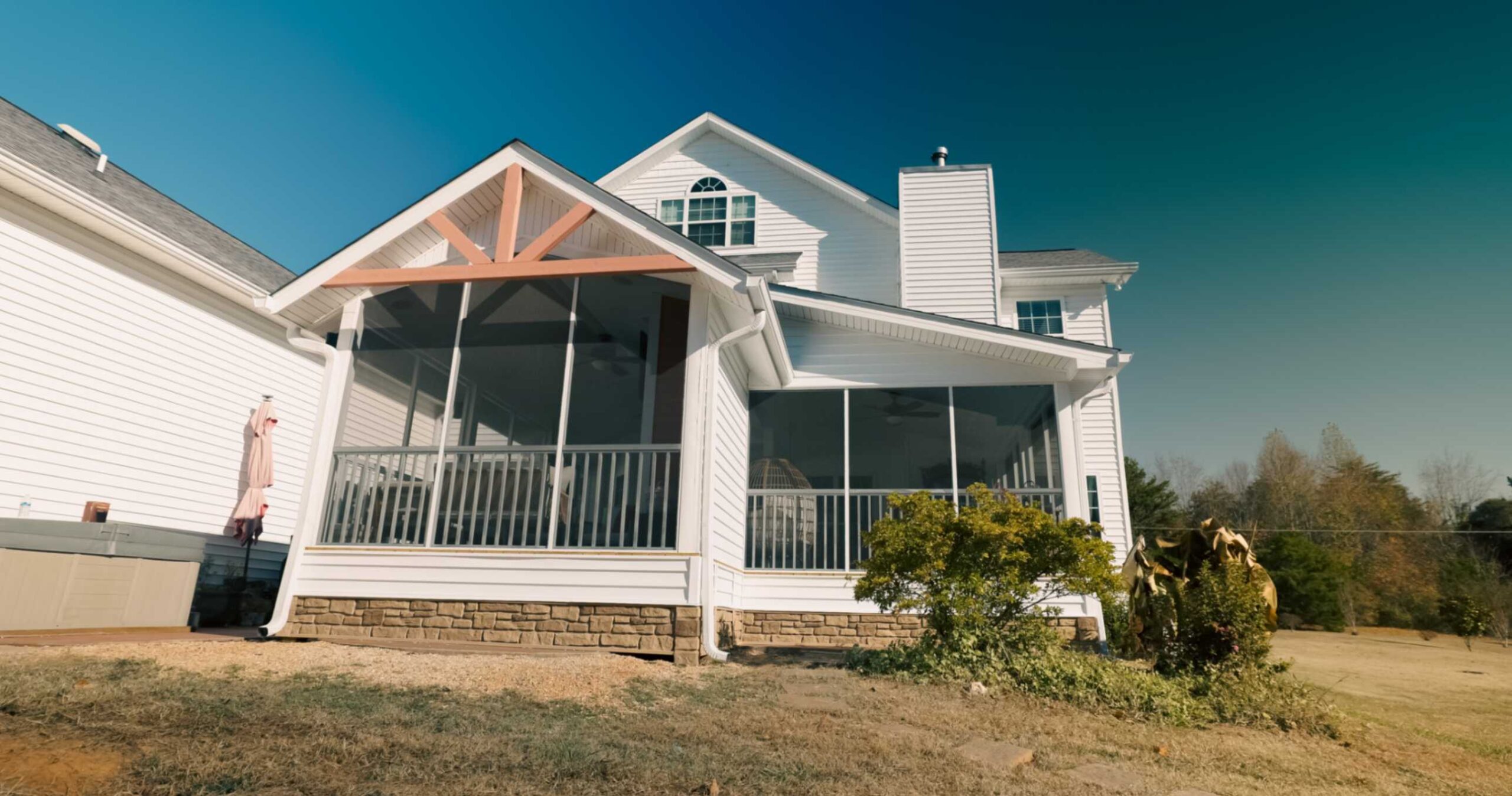
The screen room vs sunroom question comes down to one thing: how you want to use the space, and in which months. Both give you a roof overhead, shade and a bug-free place to relax. But one lets the fresh air in, and the other keeps the weather out. American Home builds both as part of our outdoor living services, often on top of a new or existing deck.
Quick answer: A screen room is the lower-cost choice and is best for bug-free spring, summer and fall evenings outside. A sunroom costs more, but its glass walls let you enjoy it through more of the year. A three-season room sits in between, with windows but usually no heating or cooling.
Below, we compare all three side by side, help you pick, and cover the East Tennessee weather that matters. We also explain what happens at a free estimate, so you know what to expect before anyone measures your backyard.
Want a Screen Room or Sunroom Built for Your Home?
Get a free in-home estimate and see your options side by side.
Screen Room vs Sunroom: Side-by-Side Comparison
From the yard, they can look alike. Both are roofed rooms attached to your house. The walls, the comfort and the cost are where the screen room vs sunroom choice splits. Here’s what each one really is.
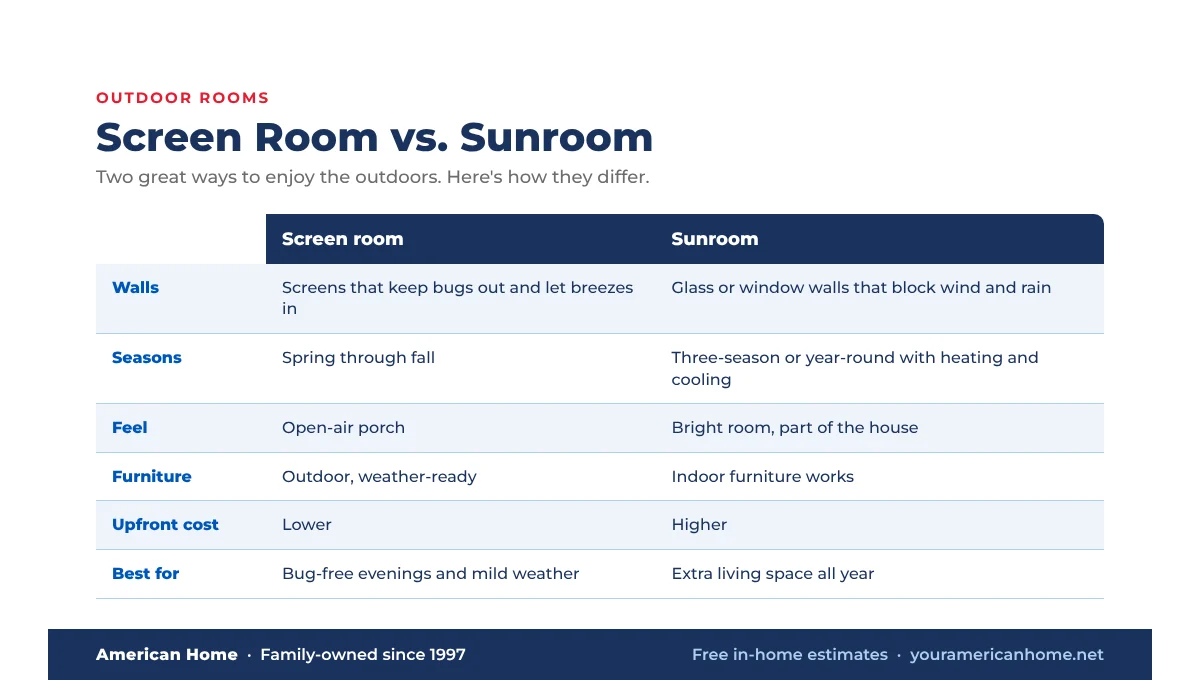
Screen rooms, three-season rooms and sunrooms differ most in walls, months of use and relative cost.
What Is a Screen Room?
A screen room is a roofed space with walls made mostly of strong screen panels. Air flows through, but mosquitoes, flies and wasps stay out. Many are built on a deck or a concrete patio and tie into your home’s roofline.
The floor stays outdoor-grade, and the furniture should be too. Think of it as a covered porch that keeps the bugs away. You hear the rain, feel the breeze and still sit in the shade.
What Is a Sunroom?
A sunroom has walls made mostly of windows. It’s built more like part of your house, with a finished floor, a roof and walls that can be insulated, and electrical outlets. A four-season sunroom is insulated and can be heated and cooled, so you can use it in January and July.
A sunroom addition often feels like a bright extra living room. You can put a sofa, a rug, a TV or a reading chair in it without worrying about rain. It’s the most “indoor” of the three options.
What Is a Three-Season Room?
A three-season room is the middle step. It has windows instead of screens, so it blocks wind, rain and most pollen. But it usually isn’t insulated or tied into your home’s heating and cooling.
Many three-season rooms have windows that slide open with screens behind them, so you still get a breeze on nice days. Expect it to be comfortable in spring, summer and fall, and chilly on the coldest winter days. A space heater can stretch the season a bit.
Comfort, Use and Upkeep
Here’s how the three compare in daily life. These differences matter more than looks when you live with the room for years.
- Months of use: Screen room, the warm months. Three-season room, most of the year. Four-season sunroom, all year.
- Weather: Screens let in wind-blown rain and fine pollen. Glass keeps them out.
- Furniture: Screen rooms need outdoor furniture. Sunrooms can hold indoor sofas and rugs.
- Upkeep: Screens can tear and need patching or replacing over time. Windows need cleaning and seals checked.
- Feel: A screen room feels like outdoors. A sunroom feels like indoors with a view.
Cost of a Screen Room vs Sunroom
We don’t list prices because every home and lot is different. In general, a screen room is the lowest-cost option of the three. A three-season room usually costs more, since windows cost more than screens. A four-season sunroom is typically the highest, because it needs insulation, more electrical work and often heating and cooling.
Building on a sturdy existing deck or patio can lower the cost compared to starting from bare ground. Roof style, room size, how the room ties into your house and permits all change the price. A free in-home estimate is the only way to get your real number. For a rough starting point, try our home remodeling cost calculator.
Not Sure Which Room Fits Your Backyard?
We will look at your deck or patio and give you a free, written estimate.
Which Is Right for You? How to Decide
Most people know the answer once they picture how they’ll really use the room. Settle the screen room vs sunroom question by asking yourself these questions.
- When do you want to use it? Summer nights and fall football only? A screen room fits. Morning coffee in February? Look at a sunroom.
- Do you love fresh air? A screen room gives you the breeze and the sound of rain.
- Do allergies bother you? Glass keeps spring pollen out much better than screens.
- What will go inside? Indoor furniture, a TV or plants that need warmth point to a sunroom.
- What’s your budget? A screen room gets you outside for less.
- Will you want more later? Ask if the frame can be built to take windows down the road.
If you can’t decide, a three-season room is a fair middle ground. It costs less than a full sunroom but keeps out rain and pollen. Many families find it’s the room they use most.
East Tennessee Weather and the Screen Room vs Sunroom Choice
Our climate is a big part of this decision. Knoxville summers are hot and sticky, and mosquitoes are out from spring into fall. A screen room lets you sit outside on those evenings without getting bitten. Shade plus a ceiling fan can make a humid night feel much better.
Spring brings thick yellow pollen and strong storms. Fine pollen can pass through screens and coat your furniture. If that bothers you, a three-season room or sunroom keeps it out. Our winters are milder than up north, which is one reason a three-season room gets so much use here.
Sloped Lots, Decks and Trees
Many East Tennessee homes sit on hills, so the back door often opens onto a raised deck. A screen room on a deck is a popular way to use that space. The deck must be strong enough to carry a roof, though. Sometimes it needs new footings or extra framing first.
Tall trees give great shade but drop leaves, pine needles and limbs. Roof design and gutters matter so water and debris move away from the room. In wooded parts of Knox County and Blount County, plan for leaf cleanup on the roof each fall.

A screen room on a raised deck makes good use of a sloped backyard.
Insulation for a Year-Round Sunroom
If you want a sunroom addition you can use in winter and summer, insulation and good windows matter a lot. Lots of glass means lots of heat gain in July and heat loss in January. Without the right build, a sunroom can feel like an oven or an icebox.
The U.S. Department of Energy’s insulation guide explains how insulation keeps rooms comfortable. Ask how the roof, floor and walls will be insulated, what kind of glass is planned, and how the room will be heated and cooled.

Big windows bring in light and views, and the right build keeps the room comfortable.
Mistakes to Avoid With a Screen Room vs Sunroom
A few simple mistakes cause most of the regrets we hear about. Avoid these and your new room will feel right for years.
- Building on a deck that can’t carry the load. A roof adds a lot of weight. Have the deck checked first.
- Picking a screen room when you really want winter use. Be honest about the months you’ll sit out there.
- Forgetting power and lights. Outlets, lighting and a ceiling fan are easier to plan now than add later.
- Skipping permits. Roofed rooms usually need a permit. Make sure yours is pulled.
- Using indoor furniture in a screen room. Rain and humidity will ruin it.
Questions to Ask Your Contractor
The right questions help you compare bids fairly and spot a weak plan early. Bring these to every estimate.
- How will the room tie into my roofline, and how will you handle the flashing, the metal strips that seal the joint?
- Is my deck or patio strong enough, or does it need work first?
- Who handles the permit?
- What’s included: electrical, fans, lights, gutters and doors?
- Can a screen room be upgraded to windows later?
- Do you offer financing options?
A good contractor will answer plainly and put the plan in writing, including what is and isn’t in the price.
What to Expect at Your Free Estimate
Our free in-home estimates are simple and low-key. We come to your home, look at your deck, patio or yard, and measure. We check how the new roof can tie into your house and talk about how you want to use the space.
Then we show you options side by side, from screen panels to window styles, so you can see the screen room vs sunroom difference in person. You get a written price, with no pressure to decide on the spot. We also offer $0 down financing options for qualified homeowners. You can book your free estimate here.
Screen Room vs Sunroom: The Bottom Line
If you want fresh air and bug-free evenings in the warm months, a screen room is the lower-cost, easy win. If you want a bright room you can use through more of the year, look at a three-season room or a four-season sunroom. The right pick is the one you’ll actually use.
American Home is family-owned and has served East Tennessee since 1997, with more than 15,000 projects completed. See our outdoor living services and deck building, then let us help you settle the screen room vs sunroom choice at your home.
Screen Room vs Sunroom FAQs
What is the difference between a screen room and a sunroom?
A screen room has screen walls that let air in and keep bugs out. A sunroom has glass walls and is built more like part of your house. A four-season sunroom can be heated and cooled for year-round use.
Is a screen room cheaper than a sunroom?
Yes, in general. A screen room is usually the lowest-cost option. A three-season room costs more, and a four-season sunroom is typically the highest. Your real price depends on your home, so a free estimate is the best way to know.
What is a three-season room?
It is a roofed room with windows instead of screens. It keeps out wind, rain and pollen but usually is not insulated or heated and cooled. Most people use it in spring, summer and fall.
Can a screen room be built on an existing deck?
Often, yes. The deck has to be strong enough to carry the roof. Some decks need new footings or framing first. We check this at your free estimate.
Can I turn a screen room into a sunroom later?
Sometimes. It depends on how the frame, roof and floor were built. If you think you may want windows later, ask your contractor to plan for that from the start.
Do I need a permit for a screen room or sunroom?
Roofed additions usually need a permit in East Tennessee. Rules vary by city and county, so ask your contractor who will handle it before work starts.
Ready to Enjoy Your Backyard More Months of the Year?
Schedule your free in-home estimate with American Home today.