Hardie board vs vinyl siding is the choice most Knoxville homeowners land on when it’s time to re-side the house. Both are solid materials, and both can look great. They differ in cost, upkeep, feel and how they hold up to our weather. This guide lays them side by side so you can pick with confidence, and our siding replacement team can help you see both up close.
Quick answer: Vinyl siding usually costs less up front, installs faster and never needs paint. James Hardie fiber cement costs more, but it’s thicker, resists fire, rot and pests, and gives a deeper, wood-like look. If budget and low upkeep lead your list, vinyl often wins. If durability and curb appeal lead, Hardie board often does.
American Home is a family-owned company that has served East Tennessee since 1997 and finished more than 15,000 projects. We install both vinyl and James Hardie fiber cement, so we have no reason to push one over the other. We just want you to get the right fit for your home.
Want to See Hardie Board and Vinyl Side by Side?
Get a free in-home estimate with real samples and a written price.
Hardie Board vs Vinyl Siding: Side-by-Side Comparison
Hardie board is a brand name for fiber cement siding made by James Hardie. Fiber cement is a mix of cement, sand and wood fibers pressed into planks and panels. Vinyl siding is made from PVC, a tough plastic, and comes in panels that lock together. Here’s how the two stack up on the things homeowners ask about most.
- Up-front cost: Vinyl is lower. Hardie board is higher for both material and labor.
- Install time: Vinyl is lighter and goes up faster. Fiber cement is heavy and takes more care to cut and hang.
- Look: Vinyl has come a long way, but Hardie board has deeper texture and crisper lines that read more like painted wood.
- Upkeep: Vinyl never needs paint. Hardie board will need repainting down the road, though factory finishes last a long time.
- Toughness: Hardie board resists dents, fire, rot and insects. Vinyl can crack from a hard hit, especially in cold weather.
- Moisture: Both shed water well when installed right. Neither one fixes a bad install.
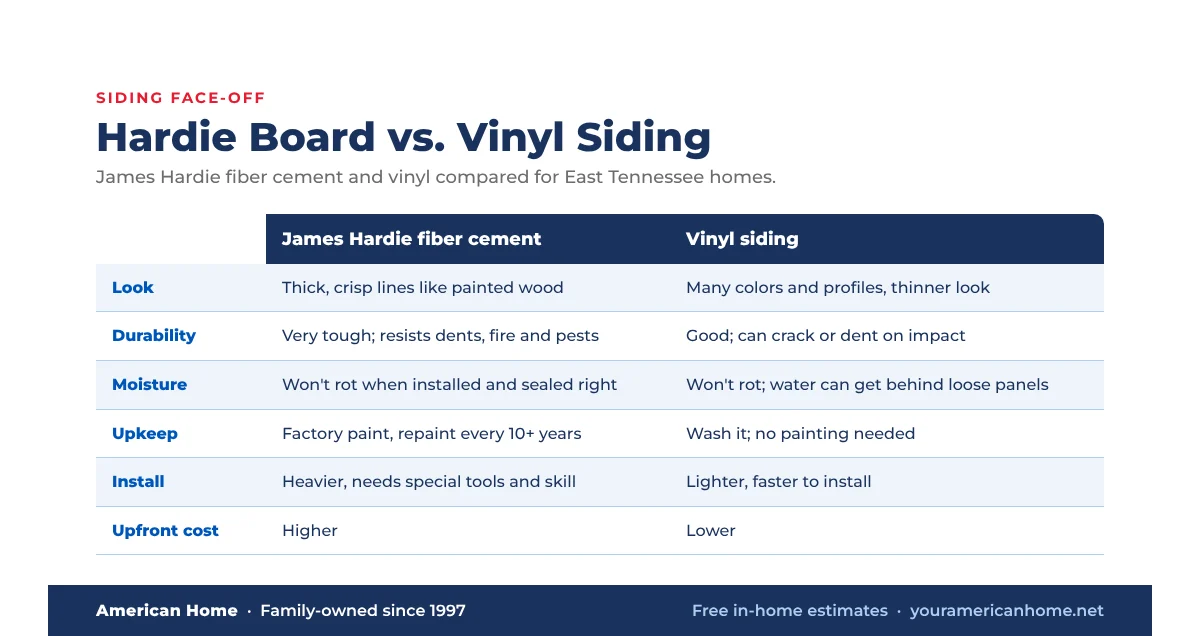
A quick look at how James Hardie fiber cement and vinyl siding compare on cost, looks, upkeep and toughness.
Cost: Fiber Cement vs Vinyl Siding
When people compare fiber cement vs vinyl siding, cost is usually the first question. Vinyl siding is the lower-cost option in most cases. The panels cost less, they weigh less and a crew can install them faster. That keeps labor lower, too.
Hardie board costs more because the material is heavier and the install takes special tools, dust control and more people. Trim, wraps and paint colors can add to the price on either one. The size of your home, the number of corners and windows, and how much old siding has to come off all play a part. The only way to know your number is an in-home estimate.
When you weigh Hardie board vs vinyl siding on cost, look at the full picture. Vinyl saves money on day one. Hardie board may ask for more up front, but some homeowners feel the tougher surface and richer look are worth it over the long run.
Looks and Curb Appeal
Vinyl comes in many colors and styles, from classic lap to shakes and board and batten. Today’s better vinyl panels have more texture and thicker edges than older products. On many homes, it looks clean and sharp from the street.
Hardie board has a heavier, more solid look. The grooves are deeper and the boards lie flatter against the wall, so it reads more like real wood. Many buyers in older Knoxville neighborhoods like it for craftsman and farmhouse styles. For color ideas, see our guide to choosing the best siding color.
Durability and Upkeep
Fiber cement is hard to dent and does not burn, melt or feed termites. Woodpeckers usually leave it alone. It does need its joints caulked and, over time, fresh paint. Vinyl needs almost nothing beyond a yearly rinse with a garden hose. It can warp if strong reflected sunlight hits it, and a stray baseball or mower rock can crack a panel.
The good news is that either material can last for many years with a good install. Loose panels, missing flashing and poor nailing are what cause most siding problems, not the material itself. That makes the installer just as important as the product. In the Hardie board vs vinyl siding choice, a careful crew matters as much as the material you pick.
Not Sure Which Siding Fits Your Budget?
We will measure your home and price both options at no cost.
Which Siding Is Right for Your Home?
There’s no single winner in the Hardie board vs vinyl siding debate. The right pick depends on your home, your budget and how long you plan to stay. Use these simple guides to point you in the right direction.
Start by thinking about what bugs you most about your current siding. If it is the cost of painting every few years, low-upkeep vinyl may solve it. If it is dents, rot or a tired look, Hardie board may be worth the higher price. Walking through Hardie board vs vinyl siding this way keeps the focus on your home, not on sales talk.
Vinyl May Be the Better Fit If
Vinyl makes sense for a lot of East Tennessee families. It’s a strong choice when keeping the project cost down matters most, or when you’d rather never think about paint again. Vinyl is often a good fit if:
- You want the lowest up-front cost for a full re-side.
- You’d like little to no upkeep over the years.
- You’re getting the home ready to sell soon.
- Your home has a simple shape with few corners and trim details.
Hardie Board May Be the Better Fit If
James Hardie siding in Knoxville is a popular pick for homeowners who plan to stay put. It gives a high-end look and stands up to hail, hard hits and pests. Hardie board is often a good fit if:
- You plan to live in the home for many years.
- You want the look of painted wood without the rot.
- Your home is near woods, where fire safety and pests are a concern.
- You want a heavier, more solid feel on the outside of your home.
Still torn? Many homeowners mix the two, such as vinyl on the sides and back with fiber cement accents on the front. Our post comparing siding materials for Powell homes covers composite and log-look options, too.
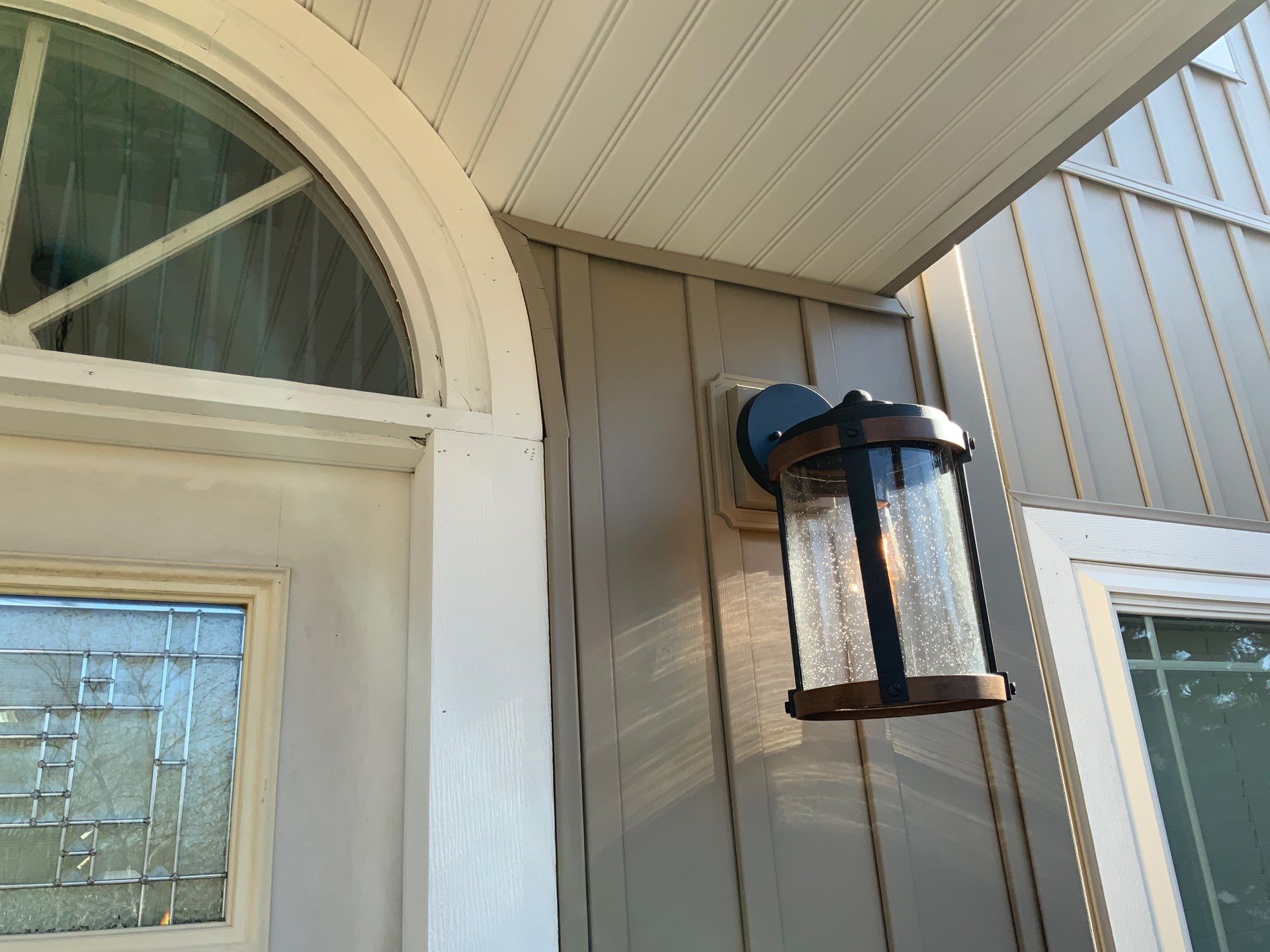
Board and batten siding comes in both vinyl and fiber cement, so you can get this look either way.
Hardie Board vs Vinyl Siding in East Tennessee Weather
Our climate puts siding to the test. Summers are hot and humid, spring brings heavy rain and strong storms, and winters bring freeze-thaw swings. Both materials can handle this when they’re installed with a proper house wrap and flashing, the thin metal or tape pieces that seal joints around windows and doors.
Moisture is the real enemy. Water that gets behind siding can rot the wall sheathing and lead to mold. The EPA’s guide to mold and moisture explains why keeping water out of walls matters so much. Good installers leave gaps at the bottom so water can drain, and they seal every opening.
Homes on hills and wooded lots face their own issues. Falling limbs and hail can dent or crack vinyl, while fiber cement tends to shrug off those hits. Cabins in Sevier County and homes in shady parts of Knox County also deal with damp, pollen and mildew. A yearly cleaning helps either siding look its best. After a big storm, our storm damage repair team can check for loose or broken panels.
Mistakes to Avoid When Choosing Siding
Most siding regrets come from rushing the decision or hiring the wrong crew. Here are the common mistakes we see when homeowners weigh Hardie board vs vinyl siding:
- Choosing on price alone. A low bid may skip house wrap, flashing or trim work that protects your walls.
- Picking a color from a tiny chip. Colors look different on a whole house. Ask to see larger samples or nearby homes.
- Ignoring the wall under the siding. Rotted sheathing should be fixed before new siding goes on.
- Hiring a crew new to fiber cement. Hardie board needs special cutting, nailing and clearance rules.
- Paying in full up front. A fair contractor won’t ask for the whole amount before the work is done.
Questions to Ask a Siding Contractor
A few good questions can tell you a lot about who you’re hiring. Ask each company the same things so you can compare answers side by side:
- Do you install both vinyl and fiber cement, and how often?
- Will you remove the old siding or go over it?
- What house wrap and flashing do you use?
- How will you handle rotted wood if you find it?
- What warranty covers the material and the labor?
Our guide to hiring the right siding contractor has more tips. The vinyl industry group Polymeric Exteriors also shares general info on vinyl products.
What to Expect at Your Free Estimate
Our free in-home estimates are relaxed and simple. We walk around your home and look at the current siding, trim and any soft spots. Then we measure each wall so your price is based on your home, not a rough guess.
Next, we show you vinyl and James Hardie samples side by side so you can see and feel the difference. You get a written price for the options you like, so you can compare Hardie board vs vinyl siding with real numbers for your home. There is no pressure to sign. We also offer $0 down financing options for qualified homeowners. You can request your free estimate online in about a minute, or use our cost estimate calculator to plan first.
How American Home Helps You Decide
Since 1997, American Home has helped families in Knoxville, Maryville, Farragut, Powell and across East Tennessee choose siding that fits their homes. Because we install vinyl, James Hardie fiber cement, composite and log-look siding, we can give you an honest take on Hardie board vs vinyl siding for your house.
Ready to see both options in person? Visit our siding services page to learn more, or reach out for a free estimate. We’ll help you weigh cost, looks and upkeep so you can choose with confidence.
Hardie Board vs Vinyl Siding FAQs
Is Hardie board better than vinyl siding?
It depends on your goals. Hardie board is tougher and has a more wood-like look, but it costs more and needs paint over time. Vinyl costs less and needs almost no upkeep. Many homeowners are happy with either one when it is installed well.
Which costs more, Hardie board or vinyl siding?
Hardie board usually costs more than vinyl for both materials and labor. It is heavier and takes more time and special tools to install. Your exact price depends on your home, so a free in-home estimate is the best way to compare.
Does Hardie board need to be painted?
Yes, over time. James Hardie siding often comes with a factory finish that lasts a long time, but it will need fresh paint someday. Vinyl siding has color all the way through and never needs paint.
How does fiber cement vs vinyl siding hold up in storms?
Fiber cement usually handles hail, flying debris and falling limbs better than vinyl, which can crack from a hard hit. Both need proper house wrap and flashing to keep wind-driven rain out of your walls.
Does vinyl siding fade in the sun?
Vinyl can fade some over many years, especially darker colors on walls that get strong afternoon sun. Newer products resist fading better than older ones. Ask your contractor how a color holds up before you choose.
Can you put Hardie board over old siding?
In most cases, the old siding comes off first so the installer can check the wall and fix any rot. Going over old siding can hide problems. Your contractor should explain the best approach for your home.
Ready to Pick Your New Siding?
Book a free in-home siding estimate and compare your options with no pressure.