

Siding materials all have a different look, price, lifespan and care routine, so the right pick depends on your home and your goals. Vinyl, fiber cement, engineered wood, aluminum or real wood? Each one solves some problems and brings others.
Quick answer: Quality vinyl is the best value for most Powell homes. Insulated vinyl adds comfort. James Hardie fiber cement is the most durable choice with a painted-wood look. Real wood looks great but needs the most upkeep.
This side-by-side guide will help you narrow down your options before you talk to a contractor. We’ll cover the pros and cons of each, what works best in our East Tennessee weather and why the installation matters just as much as the product.
Comparing siding options in Powell?
Get a free, no-obligation estimate and see real samples on your own home.
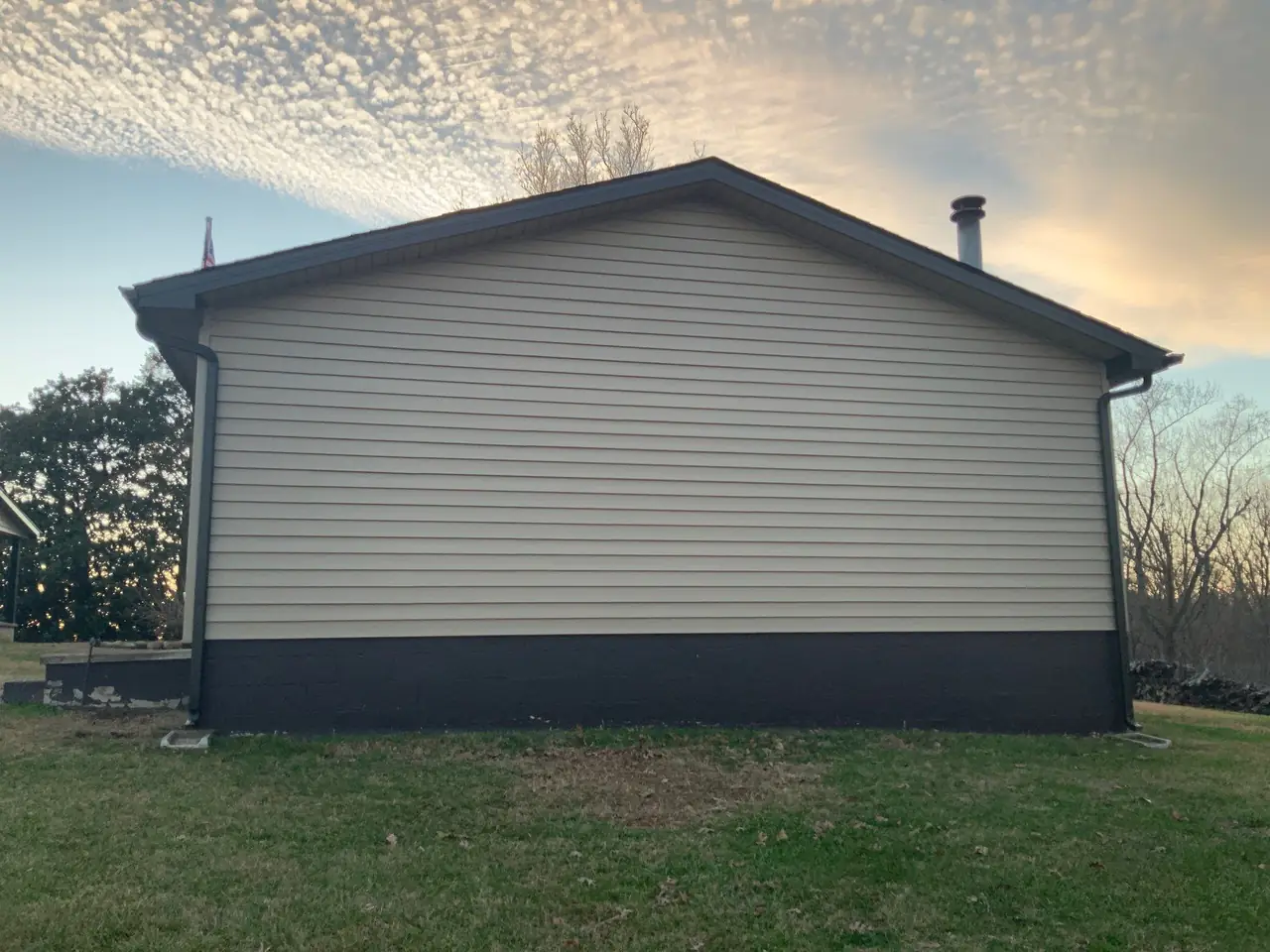
Quality vinyl siding with dark trim on a ranch home.
How to Compare Siding Materials
It’s easy to get lost in brochures. Instead, compare siding materials on the few things that really affect your life in the house. Here’s what we suggest you weigh:
- Upfront cost: what it costs to buy and install
- Upkeep: how often you’ll clean, paint or repair it
- Durability: how it handles storms, hail, bugs and moisture
- Look: the styles and colors you can get
- Comfort: whether it helps cut drafts and outside noise
Rank these from most to least important for you. That ranking points you toward the right material fast.
Siding Materials at a Glance
This quick chart compares the most common siding materials on homes around Powell and Knox County. Use it as a starting point, then read the details below for each one.
| Material | Upkeep | Look | Best for |
|---|---|---|---|
| Vinyl | Low; wash once or twice a year | Many styles and colors | Value and low upkeep |
| Insulated vinyl | Low | Vinyl look with a foam backing | Comfort and fewer drafts |
| Fiber cement | Moderate; repaint after many years | Painted-wood look | Durability and fire resistance |
| Engineered wood / composite | Moderate | Real wood texture | Wood look with better moisture resistance |
| Aluminum | Low to moderate; dents and fades | Mostly older homes | Matching existing siding |
| Natural wood | High; regular paint or stain | Classic and natural | Historic homes |
The 6 Main Siding Materials Explained
Every one of these siding materials can look good on the right house. The differences show up over time, in how much work they take and how they handle our weather. Here’s what you should know about each.
1. Vinyl Siding
Vinyl is the most widely used siding in East Tennessee. It never needs painting, resists moisture and bugs, and comes in many styles. You can get lap, Dutch lap, board and batten, shakes and log-look.
Pros: affordable, low upkeep, lots of colors. Cons: it can crack from a hard hit, and cheap thin panels may warp or rattle in wind. Picking a thicker, quality panel makes a big difference. The Polymeric Exteriors Association has more background on vinyl products.
2. Insulated Vinyl Siding
Insulated vinyl has rigid foam bonded to the back of each panel. The foam makes the panel stiffer, so it lies straighter on the wall. It also adds a layer that helps reduce drafts and outside noise.
It costs more than standard vinyl. Many homeowners feel the comfort and the straighter look are worth it, especially on older homes with uneven walls. Ask to hold a sample. You will notice right away how much more solid the panel feels in your hand.
3. James Hardie Fiber Cement
Fiber cement is made from cement, sand and wood fibers. James Hardie is the best-known brand. It looks like painted wood, resists rot, insects and fire, and handles impact well.
Pros: very durable, upscale look, holds paint well. Cons: it costs more than vinyl, it’s heavy to install and it will need repainting after many years. Among siding materials, it’s often the top pick for homeowners planning to stay a long time.
4. Engineered Wood and Composite
Engineered wood and composite siding are treated to resist moisture and insects better than natural wood. They keep a real wood texture. They’re lighter than fiber cement and usually come primed or prefinished.
These siding materials sit in the middle on price. They’re a good fit if you love the look of wood but don’t want to stain it every few years. Edges and cuts must be sealed well during installation to keep water out.
5. Aluminum Siding
Aluminum was common on homes built from the 1950s through the 1970s. You’ll still see plenty of it around Powell. It doesn’t rot, but it dents easily, and the finish chalks and fades in the sun.
Few homeowners pick aluminum today for a whole house. Most people replacing it switch to vinyl or fiber cement. If your aluminum is dented, faded or loose, it may be time to read about the benefits of siding replacement.
6. Natural Wood Siding
Wood clapboard, cedar shakes and board and batten are classic and beautiful. They also need the most care. Expect regular painting or staining and close watch for rot and bugs in our humid climate.
Wood makes sense on some historic homes or for owners who enjoy the upkeep. For most families, a wood-look option gives a similar style with far less work. If you do choose real wood, plan on a check every year. Look for peeling paint, soft spots and carpenter bee holes, and fix them fast before water gets in.
Which Siding Materials Work Best in Powell?
Powell gets hot, humid summers, heavy spring rain and some hard winter freezes. Many homes sit under big trees, which means shade, leaves and moisture on the walls. Those conditions favor siding materials that shrug off water and mildew.
Vinyl and fiber cement both do well here. Wood needs the most attention in shady spots. Whatever you pick, keep gutters clean and plants trimmed back. Our siding maintenance tips show you how.
Hills and sloped lots around Powell also send rain toward some walls more than others. The side of the house that faces storms, or sits low on the lot, usually wears out first. Give those walls extra thought when you pick a material.
How to Decide
If you’re still stuck, start with your main goal. This short guide matches common goals to siding materials:
- On a budget and want little upkeep? Quality vinyl.
- Want better comfort? Insulated vinyl with new house wrap.
- Want top durability and a painted-wood look? James Hardie fiber cement.
- Want real wood texture? Engineered wood or composite.
- Want a rustic cabin look? Log-look vinyl.
Then think about color. Our guide to choosing a siding color can help. For a rough budget, try our home remodeling cost calculator.
Installation Matters as Much as Siding Materials
Even the best siding materials fail if they’re put on wrong. Good installation starts with checking the wall for rot. Then comes new house wrap, the thin weather barrier under the siding. Flashing, the metal or membrane strips that seal joints, goes around windows and doors.
Vinyl must be nailed loosely enough to expand and shrink with the weather. Fiber cement needs the right fasteners and spacing. Good crews also cut and seal neatly around vents, outlets and hose faucets, and leave the right gaps at corners and trim. Those small details are where many leaks start. Ask any contractor to explain these steps. If they can’t, keep looking.
How American Home Helps Powell Homeowners
American Home is a family-owned company that has served East Tennessee since 1997, with more than 15,000 projects completed. We install vinyl, insulated vinyl, James Hardie fiber cement, composite and log-look siding in Powell, Halls and across Knox County.
At your free in-home estimate, we’ll bring samples of different siding materials so you can see and feel them on your own house. You’ll get honest advice and a clear, written price. Financing options are available for qualified homeowners. See our siding services to learn more.
Siding Materials FAQs
What are the most common siding materials?
Vinyl is the most common in East Tennessee. Fiber cement, engineered wood or composite, aluminum and natural wood are the other main options. Each has its own cost and upkeep.
Is vinyl or fiber cement siding better?
It depends on your goals. Vinyl costs less and needs almost no upkeep. James Hardie fiber cement is tougher, resists fire and looks like painted wood, but costs more and needs paint eventually.
Which siding materials need the least upkeep?
Vinyl and insulated vinyl need the least. Most homes only need a gentle wash once or twice a year. Fiber cement is close behind but will need repainting after many years.
Should I replace old aluminum siding?
If it is dented, chalky, faded or loose, replacing it is often smart. Most homeowners switch to vinyl or fiber cement for a fresh look and lower upkeep.
Can I see siding materials before I choose?
Yes. We bring samples to your free estimate so you can see colors and textures on your own home in real daylight. That makes the choice much easier.
Get a free siding estimate
See vinyl, fiber cement and composite samples at home and get a clear, no-pressure price.