
Energy efficient windows all come with a label that shows how well they perform. Once you know how to read it, you can compare windows from any brand side by side. That makes it much easier to pick the right ones for your Lenoir City home.
Quick answer: On a window label, look for a low U-factor to keep heat in, a low solar heat gain number to block summer sun, and a low air leakage number. In East Tennessee, you want a good balance of all three.
This guide explains each rating in plain words, which numbers matter most around Loudon County, and the mistakes people make when they shop.
Shopping for energy efficient windows in Lenoir City?
Get a free, no-obligation window estimate from American Home.
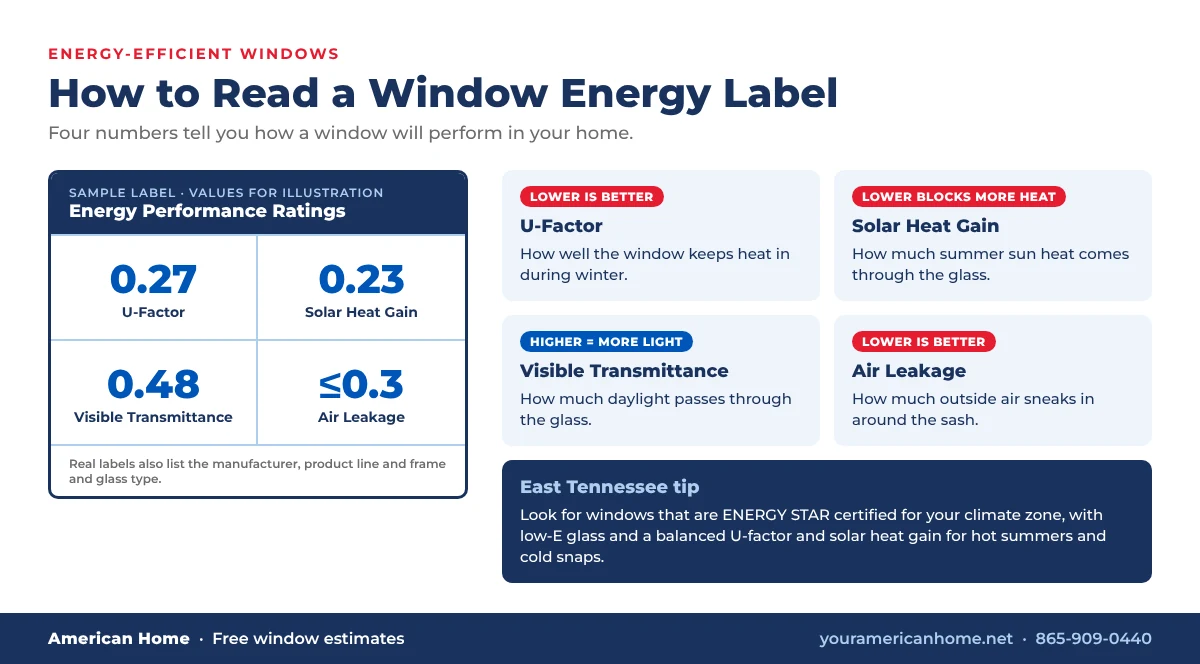
The NFRC label lists U-factor, SHGC, visible light, and air leakage.
What a Window Energy Label Tells You
Most windows sold in the U.S. carry a sticker from the National Fenestration Rating Council, or NFRC. Fenestration is just a fancy word for windows and doors. The NFRC tests the whole window, not just the glass, and lists the results in the same format every time.
That’s what makes the label so useful. Two windows may look the same in a showroom. The label tells you which one will keep your home more comfortable. It also helps you see past sales talk and focus on real numbers.
Why Energy Efficient Windows Matter in Lenoir City
Many homes in Lenoir City sit on open lots or near Fort Loudoun and Tellico lakes. That means a lot of direct sun in summer and cold wind off the water in winter. Old windows let that heat and cold right in.
Energy efficient windows act like a buffer. They keep rooms closer to the temperature you set, cut drafts near the glass, and help your heating and cooling system work less. They also block much of the UV light that fades floors and furniture. The label tells you how well each window does those jobs.
The Four Main Ratings on Energy Efficient Windows
Every label shows a few key numbers. You don’t need to be an expert to use them. You just need to know what each one means and which way is better.
U-Factor: How Well It Keeps Heat In
U-factor measures how much heat passes through the whole window. The lower the number, the better the window insulates. This matters most on cold winter nights, when warm air inside is trying to escape.
Double-pane glass, low-E coatings, gas fills, and good frames all help lower the U-factor. If you only compare one number in winter, this is the one.
Solar Heat Gain Coefficient: How Much Sun Heat Gets In
The solar heat gain coefficient, or SHGC, is a number between 0 and 1. It shows how much of the sun’s heat comes through the glass. A lower number blocks more heat.
In our long, hot summers, a lower SHGC helps keep rooms cooler. It pays off most on west- and south-facing walls, where the afternoon sun beats on the glass for hours.
Visible Transmittance: How Much Daylight Comes In
Visible transmittance, or VT, shows how much daylight passes through the glass. A higher number means brighter rooms. Some coatings that block heat also cut a bit of light.
If you love natural light, compare VT along with SHGC. You can often find glass that blocks heat well and still lets in plenty of daylight.
Air Leakage: How Drafty the Window Is
Air leakage shows how much outside air can sneak through the window when it’s closed. Lower is better. Not every label lists it, so ask if you don’t see it.
Window style plays a big role here. Casement and awning windows press against the frame when they close, so they usually seal tighter than sliding styles.
What ENERGY STAR Means for Energy Efficient Windows
ENERGY STAR is a program that certifies products that meet set efficiency rules. For windows, the rules change by climate zone. Most of East Tennessee falls in the South-Central zone. Windows here have to handle both summer cooling and winter heating.
If a window is ENERGY STAR certified for your zone, it has already met a balanced set of U-factor and SHGC limits. That’s a handy shortcut. Still, it’s worth reading the label, since some certified windows perform better than others.
Which Numbers Matter Most in Lenoir City?
Lenoir City sees hot, humid summers, cold snaps in winter, and lots of sun on homes near the lakes. Here’s how to weigh the ratings:
- Balance U-factor and SHGC. You need good insulation for winter and good heat control for summer.
- Think about which way each window faces. A lower SHGC pays off most on west and south walls.
- Don’t skip air leakage. A tight window and a tight install both matter.
- Check VT for rooms you want bright, like kitchens and family rooms.
Matching Ratings to Each Side of Your Home
You don’t have to use the same glass in every opening. Many homeowners pick a lower SHGC for windows that face the afternoon sun or the water. On a shaded north side, a higher VT can keep rooms from feeling dark.
A good window pro will walk around your home with you and point out which walls get the most sun. That way the energy efficient windows you choose fit how your home actually lives.
Features That Make Windows More Efficient
The numbers on the label come from the parts of the window. These features usually lead to better ratings:
- Low-E coatings: a very thin, clear metal layer that reflects heat but lets light through
- Gas fills: argon or krypton gas between the panes that slows heat transfer
- Warm-edge spacers: the strip between the panes, made of material that loses less heat
- Insulated frames: vinyl and fiberglass frames insulate better than aluminum
- Double-pane glass: two panes with a sealed space between them
Learn more about how two panes work in our guide to double-pane windows.
Common Mistakes When Comparing Energy Efficient Windows
A label is only helpful if you read it the right way. Here are a few traps to avoid:
- Comparing glass-only numbers to whole-window numbers. The NFRC label rates the whole window.
- Chasing the lowest U-factor while ignoring SHGC. In our climate, summer heat matters too.
- Picking very dark glass for a room you want bright.
- Forgetting that the install affects real-world comfort.
If you’re unsure, take photos of the labels and ask your installer to explain the differences.
Questions to Ask Before You Buy
Bring these questions to any estimate. A good contractor will answer them in plain words:
- Are these energy efficient windows ENERGY STAR certified for the South-Central zone?
- Can I see the NFRC label for each window style you’re quoting?
- Is the glass different for my sunny walls and my shaded walls?
- Will you do an insert or full-frame install, and why?
- How will you seal and flash each opening?
If the answers are vague, or no one can show you a label, keep shopping. Clear answers usually mean a clear, honest job.
Installation Matters Too
The label rates the window, not how it’s put in. Gaps around the frame can undo much of a window’s efficiency. A quality install fills and seals the space between the window and the wall. It also adds flashing, thin strips that guide water away from the opening.
That’s why the installer matters as much as the product. Read more about energy-saving window installation and what a good crew does differently.
How American Home Helps You Choose Energy Efficient Windows
American Home is family-owned and has served East Tennessee since 1997, with more than 15,000 projects completed. We replace windows in Lenoir City and across Loudon County, plus Knox, Blount, Anderson, and Sevier counties.
At your free in-home estimate, we’ll show you the label on each option and explain it in plain terms. You’ll get a clear price and financing options for qualified homeowners. See our window replacement services, or use our cost estimate calculator to plan ahead.
Energy Efficient Windows FAQs
What is a good U-factor for energy efficient windows?
Lower is better. For East Tennessee, a window that is ENERGY STAR certified for the South-Central zone already meets a good U-factor limit, so that is a smart place to start.
What does SHGC mean on a window label?
SHGC stands for solar heat gain coefficient. It shows how much sun heat comes through the glass. A lower number blocks more heat, which helps in hot summers.
Is ENERGY STAR the same as the NFRC label?
No. The NFRC label lists test results. ENERGY STAR uses those results to certify windows that meet set limits for each climate zone.
Do energy efficient windows make rooms darker?
Some coatings cut a bit of light. Check the visible transmittance number. A higher VT means more daylight comes through.
Does installation affect window ratings?
The label does not include the install, but a poor install can let air and water in around the frame. A good install helps the window perform the way it should.
Compare energy efficient windows at home
We will explain the ratings on each option and give you a clear, no-obligation price.