
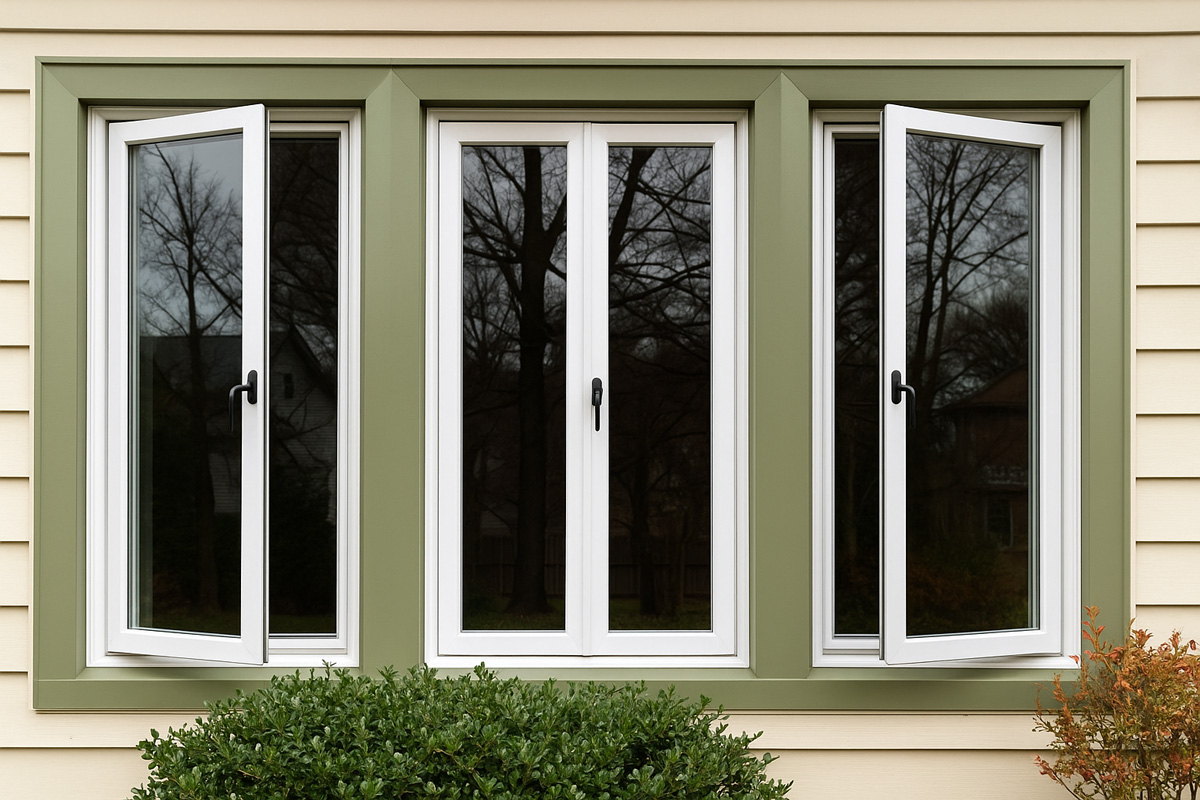
Casement windows are one of the most popular choices for replacement windows in Knoxville. They open wide for fresh air, seal tight when closed and look good on both modern and traditional homes. If your old windows stick, leak air or fog up, a casement can be a smart swap.
Quick answer: casement windows are hinged on the side and crank outward like a door. A standard vinyl casement typically runs $300 to $600 per window, plus about $100 to $300 for professional installation.
This guide explains the types of casement windows, what replacement costs, the pros and cons, and how to choose the right option for your home.
Replacing casement windows in Knoxville?
Get a free, no-obligation estimate from American Home, with financing options for qualified homeowners.
What Are Casement Windows?
A casement window is hinged at the side and opens outward with a crank handle, much like a door. People often call them crank-out windows. They give you wide, clear views and lots of airflow. That makes them popular in kitchens and bathrooms.
When you close a casement, a lock pulls the sash tight against the frame. The sash is the part that holds the glass. This tight seal helps keep drafts out. When fully open, the sash can catch a breeze and steer it into your home. On a mild spring evening in East Tennessee, that natural airflow is hard to beat.
They can be used alone or paired with fixed picture windows. Their easy use makes them a common choice for window replacement projects.
How a Casement Crank Works
Inside the frame is a small gear box called an operator. When you turn the handle, the operator pushes an arm that swings the sash open. Turn it back, and the sash pulls shut. A separate lock then holds it tight.
Because you only turn a handle, casements are easy to open over a sink or behind furniture. That’s a big help for anyone with sore hands or shoulders.
Types of Casement Windows
Casements come in several setups. The right one depends on the size of the opening and the look you want:
- Single casement: one sash that opens outward. A good fit for narrow openings.
- Double casement: two sashes that open outward from the center, also called French casement windows. Great for wide openings and big views.
- Push-out casement: no crank. You push the sash open by hand, which gives a traditional or vintage look.
- Top-hinged or bottom-hinged: often confused with awning (top-hinged) or hopper (bottom-hinged) windows. They work in a similar way, with the sash swinging out or in.
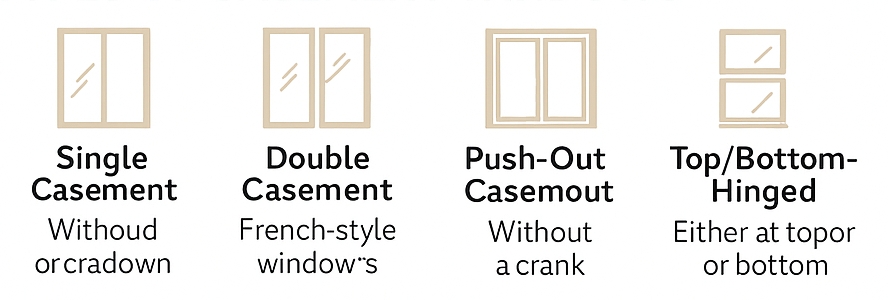
These styles can fit modern, transitional or traditional homes. A double casement works well in a wide living room opening. A single casement is a good fit for a narrow spot beside a fireplace or over a kitchen sink.
Casement and Picture Window Combos
One popular setup puts a large fixed picture window in the middle with a casement on one or both sides. You get a wide view from the center and fresh air from the sides. This combo is common in living rooms and in homes with mountain or lake views around Sevierville and Lenoir City.
Because the center glass doesn’t open, the combo also has fewer moving parts. That means less wear over time.
Casement Window Materials and Custom Options
The frame material affects how long casement windows last, how well they insulate and how they look:
- Vinyl: one of the most cost-effective choices. It’s durable, energy-efficient and needs little care, though it may not look as rich as other materials.
- Wood: a warm, timeless look that suits traditional homes. Wood needs painting or sealing from time to time to protect it from moisture and rot.
- Aluminum: sleek, modern and strong. It doesn’t insulate as well as wood or vinyl unless it has a thermal break, a barrier inside the frame that blocks heat flow.
- Fiberglass: a newer material that is strong like aluminum and efficient like vinyl. It resists warping when temperatures swing.
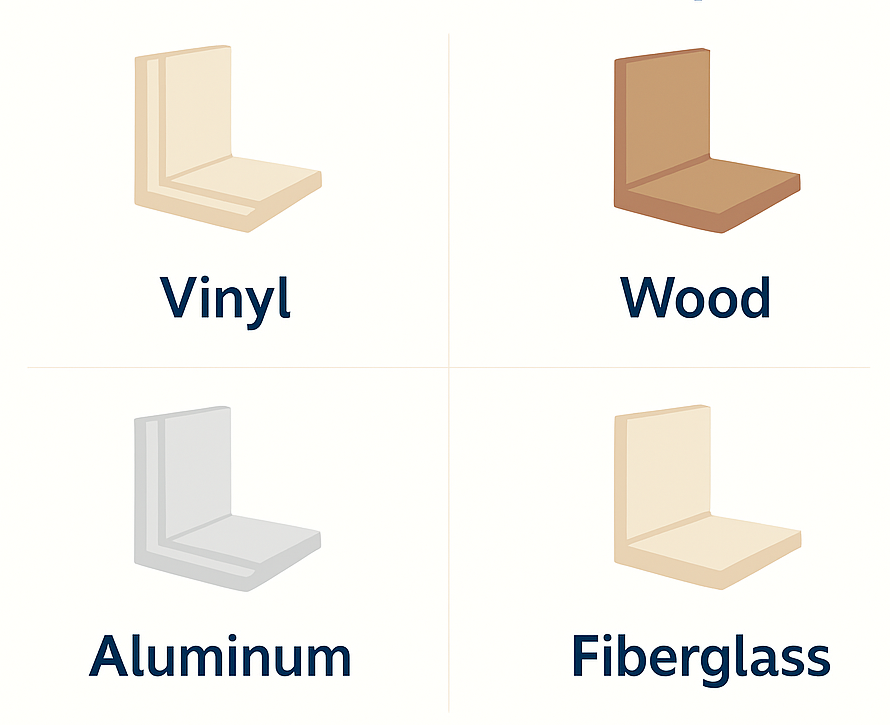
In our humid climate, moisture is the big enemy of window frames. Vinyl and fiberglass hold up well to damp summers. Wood looks beautiful, but plan on painting or sealing it every few years.
Custom Options
Casement windows can be made to custom sizes, which helps in older homes with odd-sized openings. Other choices include:
- Frame color and finish
- Interior trim options
- Hardware style and finish
- Triple-pane or low-E glass for insulation
Low-E glass has a thin, clear coating that reflects heat. It helps keep summer heat out and winter heat in. When you compare windows, the ENERGY STAR label is a simple way to spot efficient models.
Casement Window Replacement Cost
Casement window replacement cost depends on the size, frame material, glass package and installation. Typical price ranges per window:
- Standard vinyl casement: $300 to $600
- Wood casement: $500 to $1,000+
- Fiberglass casement: $400 to $800
- Custom size casement: $600 to $1,500+, depending on complexity
- Casement picture window combo: $700 to $1,200+
Other things that affect price:
- Energy-efficient glass upgrades, such as low-E or argon-filled glass
- Grilles and divided lite designs, the grids that split the glass into smaller panes
- Reinforced locks and child-safety features
Installation Costs
Professional installation typically adds $100 to $300 per window. Custom installs and older homes that need frame repairs cost more.
These ranges are for planning. Your exact price depends on your windows and your home. American Home gives you exact pricing during a free in-home estimate. You can also get a rough idea with our cost estimate calculator.
Signs It’s Time to Replace Casement Windows
Casement windows last a long time, but not forever. Watch for these signs:
- The crank spins, but the window won’t open or close
- You feel drafts around the sash on cold days
- Fog or moisture shows up between the glass panes
- The wood around the frame is soft, stained or rotting
- Your heating and cooling bills seem higher than they should be
Some problems have a simple fix. A worn crank or hinge can often be replaced on its own. But if the glass seal has failed or the frame is rotting, replacement usually makes more sense. Our list of signs you need replacement windows covers more.
Replacing Casement Windows: What to Know
If your windows are hard to open, drafty or worn, it’s probably time to replace them. Many homeowners pick casement windows for their tight seal and clean look.
Two ways to replace a casement window:
- Full-frame replacement: removes the whole window, including the frame and trim. Best when the frame is damaged or rotted.
- Insert (retrofit) replacement: fits a new window inside the existing frame. Faster and less messy when the frame is solid.
Why replace with casement windows?
- Better energy efficiency
- Improved curb appeal
- Easy crank operation, great for hard-to-reach spots
Always measure your current windows carefully. For anything beyond a simple swap, hire a pro. A wrong measurement can mean a window that doesn’t fit, and that’s a costly mistake. Check our standard window sizes guide before you shop.
Buying Casement Windows: Store, Online or Local Installer?
You can buy these windows in several places. Each option has trade-offs:
- Big-box home improvement stores: stock common sizes for quick pickup, but you measure, order and arrange installation yourself.
- Online and direct from manufacturers: the widest choice of styles, but longer lead times, and a wrong measurement is costly to fix.
- A local window installer: measures each opening, orders the right size, installs and seals the window, and stands behind the work. This is usually the best choice for replacement windows and older homes.
Older homes in Knox and Loudon County often have openings that are a little out of square. A local installer can spot that early and plan for it.
Pros and Cons of Casement Windows
No window is perfect for every room. Here’s an honest look at what casement windows do well and where they fall short.
Pros:
- Excellent airflow
- Strong seal and energy efficiency
- Clear, open views
- Easy to open with a crank, especially over sinks
Cons:
- May not suit every home style
- Can be damaged by strong wind if left open
- Crank parts may wear over time
- Usually cost more than sliding or single-hung windows
Because the sash swings outward, think about what’s outside. Don’t put a casement where it will open into a walkway, deck or shrub. And close them before a storm. Strong gusts in our spring storms can catch an open sash and bend the hinge.
Are Casement Windows Right for You?
Casement windows give you a strong mix of airflow, energy performance and clean looks. From an older ranch home to a newer one, there’s a material and size to fit your needs and budget.
Key takeaways:
- The crank-out design moves lots of air and seals tightly
- Available in vinyl, wood, aluminum and fiberglass
- Typical cost: $300 to $1,000+ per window, plus installation
- Custom sizes fit older homes with odd-sized openings
- Professional measuring and installation protect performance and warranty
How American Home Helps
American Home replaces casement windows across Knoxville and East Tennessee. We’re a family-owned company that has served the area since 1997, with more than 15,000 projects completed. We start with a free in-home estimate, measure each opening and help you pick the right style and frame.
Financing options are available for qualified homeowners. We work in Knoxville, Farragut, Powell, Maryville, Oak Ridge and nearby towns. Still comparing styles? Read our guide to types of windows.
Casement Windows FAQs
What are casement windows?
Casement windows are hinged on one side and open outward like a door, usually with a crank handle. When they close, the sash presses against the frame, which gives them a tight seal.
How much does it cost to replace a casement window?
Typical ranges are $300 to $600 for a standard vinyl casement, $400 to $800 for fiberglass and $500 to $1,000 or more for wood. Add $100 to $300 per window for professional installation. Custom sizes and older homes can cost more.
Can I replace a double-hung window with a casement window?
Usually, yes. A casement can often fit the same opening as a double-hung window. Some homes need minor frame or trim changes, which we check during the in-home estimate.
Are casement windows energy efficient?
Yes. Because the sash locks tightly against the frame, they are among the most airtight windows that open. Low-E glass and a quality installation make the biggest difference.
Can a broken casement crank be repaired?
Often it can. Crank operators and hinges can usually be replaced without replacing the whole window, which is worth checking before you buy new windows.
Get a free casement window estimate
We measure every opening and give you a clear, no-obligation price.