
Choosing luxury vinyl plank vs laminate is one of the most common questions we hear from Knoxville homeowners planning new floors. Both look like real wood, both click together fast, and both usually cost less than hardwood. But they are built very differently. That difference shows up the first time a dishwasher leaks or a big dog runs across the room. American Home installs both through our flooring installation service, so we have no reason to push one over the other.
Quick answer: Luxury vinyl plank (LVP) is the better pick for kitchens, bathrooms, laundry rooms and basements because its core handles water well. Laminate is often a little lower in cost, resists scratches very well and feels firm underfoot, so it works great in dry living rooms, bedrooms and offices. Many homes end up using both.
Below, we compare the two side by side, walk through each room of the house, and cover the East Tennessee details that can change the answer. You’ll also find the mistakes we see most often and what happens at a free in-home estimate.
Want to Compare LVP and Laminate in Your Home?
We bring samples to your home and give you a free, written estimate.
Luxury Vinyl Plank vs Laminate: Side-by-Side Comparison
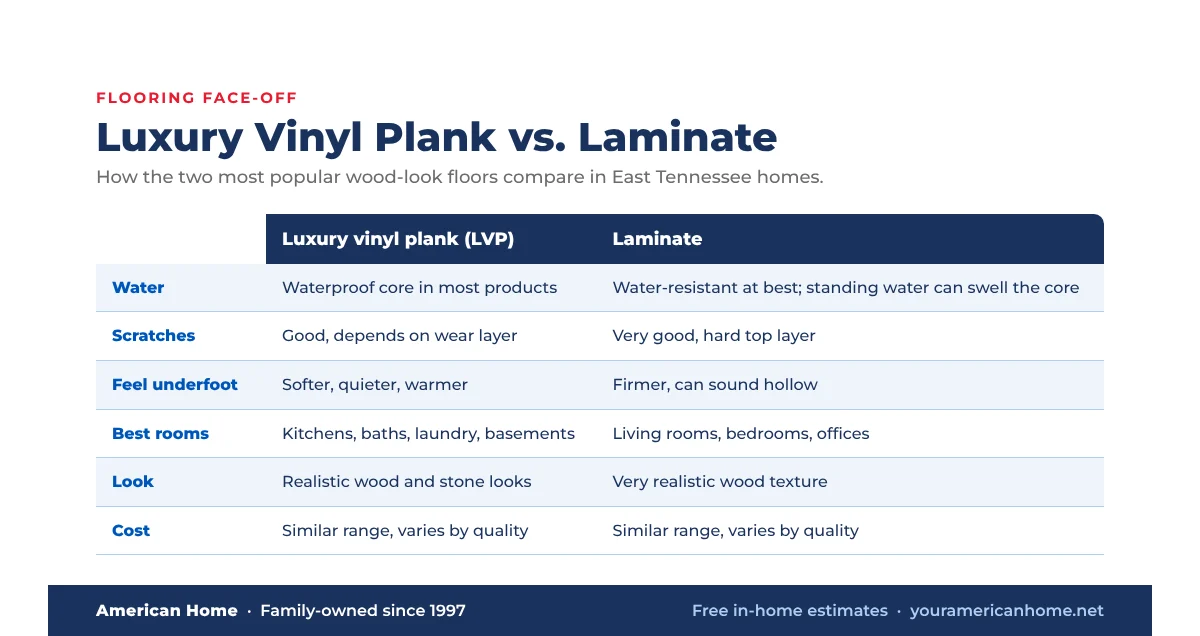
In a showroom, the two floors can look almost the same. The real difference is under the surface. Here is how luxury vinyl plank vs laminate stacks up on the points that matter most when you live on a floor every day.
- Water: LVP wins. Laminate is fine only for small spills that get wiped up fast.
- Scratches: Laminate usually wins, thanks to its very hard top coat.
- Dents: Laminate is harder. LVP can dent under heavy weight.
- Comfort and noise: LVP is softer and quieter.
- Look: Both look like wood. Laminate often has deeper texture.
- Cost: Laminate is often a little lower. Premium LVP is higher.
What Each Floor Is Made Of
Luxury vinyl plank is made of layers of vinyl. On top sits a clear wear layer that protects a printed wood-look image. Under that is a core. In many planks it’s a rigid layer made from stone and plastic (called SPC) or a wood-plastic blend (called WPC). Many planks also have a pad attached to the bottom.
Laminate has a similar printed image and a hard clear top coat. The big difference is its core. Laminate is built on high-density fiberboard, which is wood fibers pressed together with resin. That wood core gives laminate its firm, solid feel. It is also the reason laminate and standing water don’t get along.
Water and Moisture
This is the biggest split in the luxury vinyl plank vs laminate debate. Most LVP is sold as waterproof or highly water resistant. A spill can sit on it without harming the plank itself. Water can still get under any floor through gaps at the walls, though, so a careful install and good trim still matter.
Laminate’s fiberboard core can swell if water soaks into the seams. Once it swells, the edges peak up and the boards usually need to be replaced. Newer water-resistant laminates do better with spills that get wiped up quickly. Still, we don’t recommend laminate where water is a daily event or where a slow leak could sit unnoticed.
Scratches, Dents and Wear
Laminate’s top coat is very hard. It holds up well to dog claws, kids’ toys and gritty shoes, which makes it a strong choice for busy living areas. LVP resists scratches too, but its surface is a bit softer. Heavy furniture or a dropped cast-iron pan can leave a dent, especially on thinner products.
With both floors, the thickness of the wear layer matters. A thicker wear layer usually lasts longer in high-traffic spots like hallways and entries. Ask to see the spec sheet when you compare samples. Felt pads under chair legs and a good doormat help either floor look newer for years.
Look and Feel Underfoot
Laminate often has deeper texture and sharp, realistic wood detail. It feels firm, close to hardwood. Some people find it a little loud in hard shoes, so a quality underlayment, the thin pad under the floor, helps quiet it down.
LVP feels a bit softer and warmer under bare feet, and it’s usually quieter. Good LVP looks very close to real wood, though cheaper products can look flat or repeat the same pattern too often. Lay several planks of each next to each other in your own light before you decide. Showroom lighting can fool you.
Cost of Luxury Vinyl Plank vs Laminate
We don’t post prices here because every home is different. In general, laminate materials are often a little lower in cost than LVP. Basic LVP and basic laminate can be similar. Rigid core LVP with a thick wear layer and an attached pad usually costs more than standard laminate.
Your install cost depends more on your home than on the floor you pick. Removing old flooring, fixing a squeaky or uneven subfloor, moving appliances and adding stairs all change the price. The only way to know your real cost is a measured, in-home estimate. For a rough starting point, try our home remodeling cost calculator.
Not Sure Which Floor Fits Each Room?
Get a free in-home flooring estimate with samples of both, with no pressure.
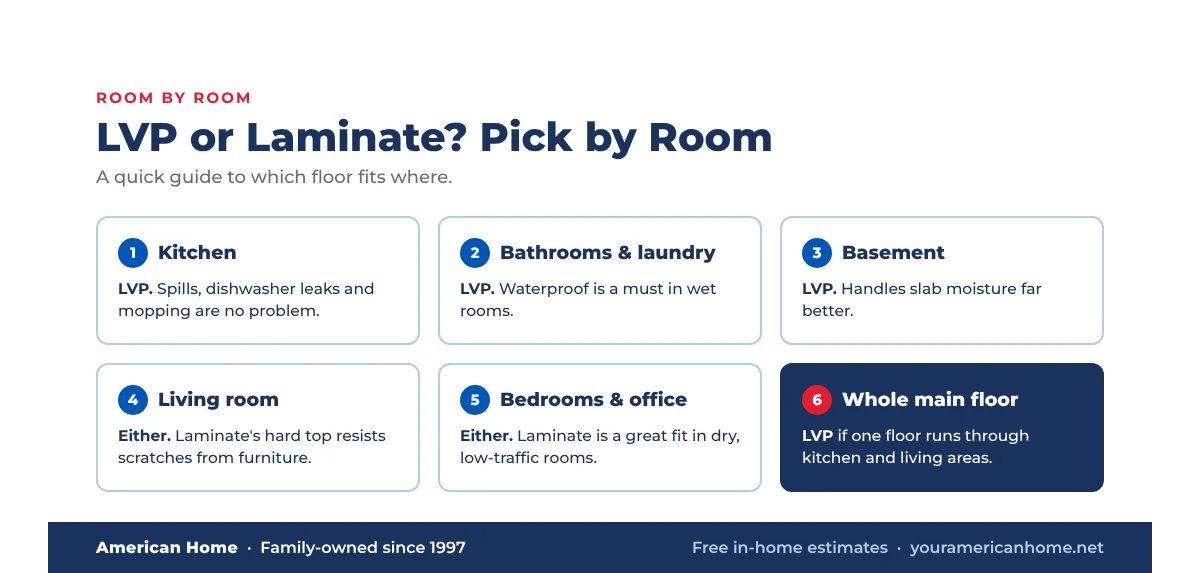
Room by room, LVP leads where water is a risk, and laminate shines in dry, busy rooms.
Which Is Right for Each Room?
Most people don’t need one floor for the whole house. When you weigh luxury vinyl plank vs laminate room by room, the choice gets much easier. Here’s how we usually guide homeowners.
- Kitchen: LVP. Spills, dishwasher leaks and mopping are part of kitchen life.
- Bathrooms and laundry rooms: LVP. Water is a daily event, and laminate is a real risk here.
- Basements: LVP. Concrete slabs can hold moisture, and LVP handles it better.
- Living rooms and dens: Either works. Laminate is great with big dogs. LVP is softer and quieter.
- Bedrooms: Either works. LVP feels warmer underfoot, and laminate stands up to rolling chairs.
- Entryways and mudrooms: LVP, since wet shoes and rain come right in the door.
- Sunrooms: Ask first. Strong direct sun can fade some floors, and big temperature swings can make some products move.
If you want one look running through the house, many brands make LVP and laminate in close colors. A matching transition strip where the two floors meet keeps it clean and safe to walk on.
How to Decide Between Luxury Vinyl Plank vs Laminate
If you’re still torn, answer these five questions. Your answers usually point clearly to one floor.
- Will this room ever see standing water? If yes, choose LVP.
- Do you have large dogs or heavy foot traffic? Laminate’s hard top coat is a plus.
- Do you have heavy furniture or a piano? Laminate resists dents better. If you pick LVP, choose a thicker rigid core.
- Do comfort and noise matter a lot? LVP is softer and quieter, which helps in upstairs rooms.
- What’s your budget for the whole project? Laminate often stretches a budget a bit further in large, dry areas.
There’s no wrong answer when the floor matches the room. Problems start when laminate goes into a wet space, or when a soft LVP sits under heavy furniture with no pads. In the LVP vs laminate flooring choice, the room should always lead.
East Tennessee Homes: What Changes the Answer
Our weather and our houses play a real role in the luxury vinyl plank vs laminate choice. Knoxville summers are hot and humid, and spring brings heavy rain. Moisture in the air can make wood-based products like laminate swell a little. That’s why laminate needs proper expansion gaps at the walls. There’s no single best flooring for Knoxville homes, but there is a best floor for each room.
Many homes in Knox County and Blount County sit on sloped lots with basements or crawl spaces. Basements built into a hill can stay damp. Before any floor goes down, a moisture check on the slab is smart. The EPA’s guide to mold and moisture in your home explains why controlling dampness matters.
Older Homes and Uneven Subfloors
Many older ranch homes around Knoxville, Oak Ridge and Maryville have subfloors that have settled or dipped over the years. Both LVP and laminate are floating floors. That means they click together and rest on the subfloor instead of being nailed or glued down.
Floating floors need a flat surface to lock tight. Rigid core LVP hides small dips a bit better. Laminate can flex and click at low spots. Either way, leveling the subfloor first is often the step that makes the job last. Skipping it can lead to gaps and broken edges down the road.
Mountain Cabins and Rentals
In Sevier County cabins and short-term rentals, floors take a beating. Guests track in mud, wet swimsuits and hiking boots. Many owners choose LVP for these homes because it handles water and cleans up fast between stays.
Some cabins also sit empty without heat or air for stretches. Big temperature swings can make any floating floor expand and shrink. If your cabin goes unheated, ask about products rated for those conditions and follow the maker’s rules for the space.
Mistakes to Avoid With LVP or Laminate
Most floor problems we’re called to fix come from a few simple mistakes. Avoid these, and either floor can last a long time.
- Putting laminate in a full bathroom or laundry room. It’s the most common regret we see.
- Skipping subfloor prep. Dips and humps lead to gaps, clicking and broken locking edges.
- Choosing by price alone. A thin wear layer can look worn in busy areas sooner than you’d like.
- Not letting the floor acclimate. Many makers ask that boxes sit in the home before install. Follow the directions for your product.
- Forgetting expansion gaps. Floors need small gaps at the walls, hidden by trim, to move with the seasons.
- Wet-mopping laminate. Use a damp, well-wrung mop or a cleaner made for laminate.
Questions to Ask Your Flooring Contractor
When you get quotes on luxury vinyl plank vs laminate, the questions you ask tell you a lot about the installer. Bring this list.
- Is this LVP rigid core or flexible, and how thick is the wear layer?
- Will you check the subfloor for flatness and moisture before you install?
- What’s included in the price: removal, haul-away, trim, transitions and moving furniture?
- How will you handle doorways, stairs and spots where the new floor meets other floors?
- What does the maker’s warranty require from me, such as cleaning or install rules?
- Do you offer financing options?
A good contractor will answer these plainly and put the details in writing. If the answers are vague, keep asking until they’re clear.
What to Expect at Your Free Estimate
Our free in-home estimates are simple and low-key. We come to your home, look at each room and measure. We check the subfloor and talk about how you use each space, from pets and kids to that kitchen sink that leaked once before.
Then we show you luxury vinyl plank vs laminate samples side by side in your own light. You get a written price for the options you like, with no pressure to decide on the spot. We also offer $0 down financing options for qualified homeowners. You can book your free estimate here.
Luxury Vinyl Plank vs Laminate: The Bottom Line
If water is part of the room, go with LVP. If the room is dry and sees lots of claws and shoes, laminate is a strong and often lower-cost choice. Many East Tennessee homes do best with LVP in the kitchen, baths and basement, and either floor in the living areas and bedrooms.
American Home is family-owned and has served East Tennessee since 1997, with more than 15,000 projects completed. Visit our flooring installation page to see what we offer. Or ask us to bring samples so you can compare luxury vinyl plank vs laminate right in your own home.
Luxury Vinyl Plank vs Laminate FAQs
Is luxury vinyl plank better than laminate?
It depends on the room. LVP is better anywhere water is a risk, like kitchens, baths and basements. Laminate is often better at resisting scratches and dents in dry, busy rooms. Many homes use both.
Which costs less: luxury vinyl plank or laminate?
Laminate is often a little lower in cost. Basic versions of each can be close. Rigid core LVP with a thick wear layer usually costs more. Your install cost depends on your home, so a free in-home estimate gives you the real number.
Is LVP or laminate better for dogs?
Laminate's hard top coat usually resists claw scratches better. LVP handles pet accidents and water bowls better. If you have a large dog and few spills, laminate is a great pick. If spills and accidents are common, LVP is safer.
Can laminate go in a kitchen?
It can if you choose a water-resistant laminate and wipe up spills fast. Still, a dishwasher or sink leak can swell the boards. For most kitchens, we suggest LVP for peace of mind.
Which lasts longer, LVP or laminate?
Both can last many years when they are installed on a flat subfloor and used in the right room. The wear layer thickness and care matter more than the type. Laminate in a wet room or LVP under heavy furniture with no pads will wear out sooner.
Can you put LVP or laminate over an existing floor?
Often, yes. Both can go over many flat, solid floors like vinyl sheet or tile. Carpet must come up. The old floor has to be flat and sound, so we check it at your free estimate.
Ready for New Floors That Fit How You Live?
Schedule your free in-home flooring estimate with American Home today.