

Kitchen flooring works harder than any other floor in your home. It takes spilled water, dropped pans, grease, dishwasher leaks and more foot traffic than almost any room in the house. If you’re planning a kitchen renovation in Powell, the floor you pick will shape how the room looks, how easy it is to clean and how long the remodel holds up.
This guide walks through the main options, what to think about before you choose, and how to plan the floor around your cabinets and counters. We’ll keep it simple and practical, the way we’d explain it at your kitchen table.
Quick answer: Luxury vinyl plank (LVP) and porcelain tile are the two most practical kitchen flooring choices for Powell homes. LVP is warmer, quieter and easier on your feet. Tile is the toughest and most water-resistant, but it’s harder underfoot and less forgiving with dropped dishes.
Planning a Kitchen Update in Powell?
Get a free in-home estimate for flooring, cabinets or a full kitchen remodel.

The floor, cabinets and counters work best when they are planned together.
What Your Kitchen Flooring Needs to Handle
Before you look at colors, think about what your kitchen floor goes through on a normal day. A floor that looks great but can’t handle water or wear will let you down fast. Here are the five jobs every kitchen floor has to do well.
- Water and spills: Sinks, dishwashers, fridges with ice makers and pet bowls all bring leak risk.
- Dropped items: Heavy pots and glass can chip or dent softer surfaces.
- Standing comfort: You spend a lot of time on your feet while you cook and clean.
- Cleaning: Grease and crumbs collect in grout lines and deep textures.
- Style: The floor ties together your cabinets, counters and the rooms nearby.
Most families care most about water and cleaning. That’s why waterproof floors have become so popular in East Tennessee kitchens, where humid summers and muddy spring weather already add moisture to the house.
Kitchen Flooring Options Compared
There are four main kitchen flooring types we install in Powell and across Knox County. Each one has real strengths and real trade-offs. The right pick depends on how you cook, who lives with you and whether your kitchen opens into other rooms. Here’s a plain look at each one.
Luxury Vinyl Plank (LVP) and Luxury Vinyl Tile (LVT)
LVP is waterproof, comfortable and comes in very realistic wood and stone looks. LVT is the same material cut into tile shapes. Both resist stains, and a protective top coat called the wear layer guards against scratches from chairs and pets.
LVP is a favorite for open floor plans. You can run it from the kitchen into the dining and living areas without a strip between rooms. It’s also kinder to dropped dishes than tile, and it feels warmer on bare feet in winter.
Porcelain and Ceramic Tile
Tile is the most durable and water-resistant kitchen flooring you can buy. Porcelain is denser than ceramic, so it holds up better in busy kitchens. Large tiles with a matte or textured finish give better grip and fewer grout lines to scrub.
The downside is comfort. Tile is hard and can feel cold, and standing on it for a long holiday meal gets tiring. Many homeowners add an anti-fatigue mat in front of the sink and range. Grout, the filler between tiles, also needs sealing so it doesn’t soak up stains.
Hardwood and Engineered Hardwood
Wood brings warmth and flows well into other rooms. It’s a classic look in older Powell homes. But wood needs quick spill cleanup, and a slow dishwasher leak can stain or warp the boards before you notice.
Engineered hardwood has a real wood top over a stable plywood base. It handles our humidity swings better than solid wood. If you love wood in the kitchen, choose a hard species, a matte finish and keep rugs near the sink.
Laminate
Laminate gives you a wood look on a tighter budget. Its top layer is very hard and resists scratches well. Many newer products are water-resistant, which makes them a better kitchen choice than older laminate.
Still, standing water can seep into the seams and swell the core. If you choose laminate, pick a water-resistant line and make sure the edges are sealed well. Wipe up spills fast and check under the sink now and then.
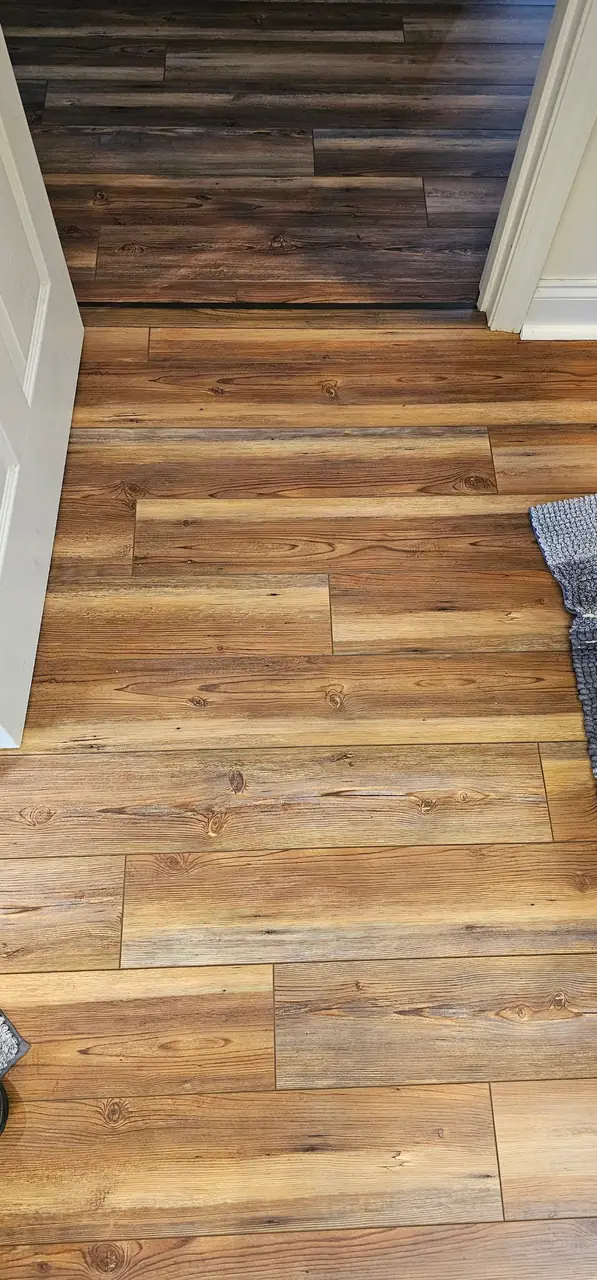
Running one plank floor from the kitchen into nearby rooms keeps the space open and easy to clean.
Should Kitchen Flooring Go In Before or After Cabinets?
This is one of the most common questions we hear during a remodel. The answer depends on the type of floor. Floating floors, like LVP and laminate, click together and are not glued or nailed down. They’re usually installed after cabinets, so the heavy cabinets don’t pin the floor and stop it from moving with the seasons.
Tile and hardwood are often installed first, or at least under the appliances. That way you can change the layout later without patching holes in the floor. Your installer should plan this with the cabinet schedule. They should also make sure there’s enough height to slide the dishwasher and fridge back into place.
Matching Kitchen Flooring to Cabinets and Counters
Your floor, cabinets and counters should feel like they belong together. A few simple rules make this easier.
- White or light cabinets: Mid-tone wood looks or warm greige LVP add nice contrast.
- Dark cabinets: Lighter floors keep the room from feeling heavy.
- Busy granite: Pair it with a calm floor that has little color variation.
- Open floor plan: One continuous floor makes the whole space feel bigger.
Bring cabinet door samples and countertop samples home with your flooring samples. Look at them together in morning and evening light, since colors shift a lot. The National Kitchen and Bath Association shares kitchen design ideas and planning tips that can help you picture the finished room. If your cabinets are in good shape, cabinet refacing can give them a new look to match your new floor.
Common Kitchen Flooring Mistakes to Avoid
We see the same few mistakes again and again. Most of them are easy to avoid if you know about them ahead of time.
- Picking by looks alone. A glossy floor may look great in a photo, but it shows every crumb and footprint.
- Skipping subfloor prep. The subfloor, the layer under your new floor, must be flat and dry. Dips cause gaps and clicking.
- Ignoring transitions. Plan how the kitchen floor meets hallways and other rooms so you don’t end up with trip edges.
- Forgetting appliance height. A thicker floor can trap your dishwasher if no one checks the clearance.
- Choosing too many floors. Three different floors in one open area can make the space feel choppy.
Avoiding these mistakes protects your investment. It also helps your new kitchen flooring look good for many years instead of just a few. For homes with kids and pets, our guide to durable flooring has more tips on tough, family-friendly floors.
Caring for Your New Kitchen Floor
Good habits keep any floor looking new. Put felt pads under chairs and stools. Use a washable rug in front of the sink. Sweep or vacuum often, since grit acts like sandpaper under shoes.
Wipe spills right away, even on waterproof floors. Use the cleaner your flooring maker recommends, and skip steam mops unless they’re approved. Once a year, check under the sink and behind the dishwasher for slow leaks. Catching water early can save your subfloor.
How American Home Helps With Kitchen Flooring in Powell
American Home is family-owned and has served East Tennessee since 1997, with more than 15,000 projects completed. We help Powell homeowners with full kitchen remodeling, cabinet refacing and flooring installation. That means your floor, cabinets and counters can be planned together from day one.
We serve Powell and all of Knox County. Start with a free in-home estimate, and we’ll bring kitchen flooring samples so you can see them in your own light. Financing options are available for qualified homeowners. You can also use our cost estimate calculator to get a feel for your budget first.
Kitchen Flooring FAQs
What is the best kitchen flooring for a busy family?
For most busy families, waterproof LVP is the best fit. It handles spills, resists scratches and feels comfortable to stand on. Porcelain tile is a strong second choice if you want the toughest surface.
Is tile or LVP better in a kitchen?
Both work well. Tile is harder and more water-resistant. LVP is warmer, quieter and easier on your feet and on dropped dishes. Many Powell homeowners choose LVP when the kitchen opens into living areas.
Can I put hardwood in my kitchen?
Yes, but it takes more care. Wipe spills fast, use rugs near the sink and pick a hard species with a matte finish. Engineered hardwood handles humidity better than solid wood.
Do I install kitchen flooring before or after cabinets?
Floating floors like LVP and laminate usually go in after cabinets. Tile and hardwood often go in first. Your installer should plan this with the cabinet schedule and check appliance clearance.
How do I keep my kitchen floor from getting damaged by leaks?
Pick a waterproof floor, wipe up spills quickly and check under the sink and dishwasher once a year. Fixing small leaks early protects the subfloor under your kitchen.
Let’s Plan Your New Kitchen Floor
Schedule your free estimate with American Home and compare samples at home.