
The best way to winter proof your home in Oak Ridge starts at the top, with your roof and attic. Our winters rarely bring deep snow, but they do bring cold rain, hard freezes and the odd ice storm. Those conditions find every weak spot in a roof, and winter leaks often show up as ceiling stains weeks after the damage starts.
Quick answer: Seal air leaks into the attic, make sure insulation and vents are working, keep gutters clear, fix loose shingles and flashing before it freezes, and check the roof and attic after every winter storm.
Below, we explain how ice dams form, which winter roof problems are common around Oak Ridge, and the steps you can take to winter proof your home before the coldest weeks arrive. We’ll also cover what to do after a storm and when to call a roofer.
Worried about winter leaks in Oak Ridge?
Get a free, no-obligation roof estimate from American Home.
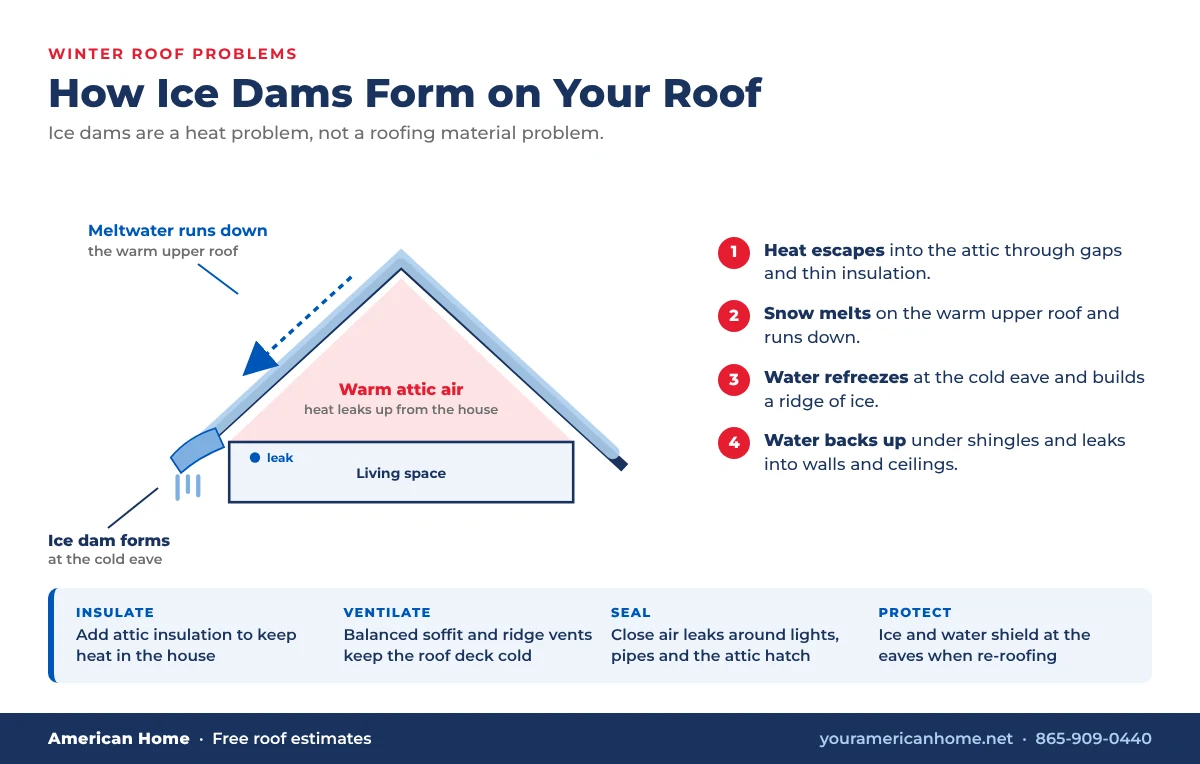
Ice dams form when attic heat melts snow that refreezes at the cold eaves.
How Ice Dams Form, and Why They Cause Leaks
An ice dam is a ridge of ice that builds up along the lower edge of the roof. It starts when heat escapes from your living space into the attic. That heat warms the roof deck, which is the layer of boards under the shingles, and melts snow or ice on the upper roof.
The meltwater runs down to the eave, the edge that hangs past the wall. The eave stays cold because there is no warm attic under it, so the water freezes again. Over a few days, the ice grows into a dam. Water then backs up behind it and seeps under the shingles, into the walls and onto your ceilings.
Why the Fix Is Usually in the Attic
Because ice dams start with heat loss, scraping ice off the roof only treats the symptom. The real fix is keeping the roof deck cold. That means sealing gaps, adding insulation where it is thin and making sure the attic has good airflow. It’s the smartest way to winter proof your home against ice dams.
In East Tennessee we don’t get ice dams every year, but a few days of snow followed by a deep freeze is enough. Older homes with thin insulation are the most likely to have them.
Winter Roof Problems Common in Oak Ridge
Ice dams get the most attention, but they are only one part of the picture. Here are the winter problems we see most often on homes in Oak Ridge and across Anderson County:
- Freeze-thaw damage. Water in small cracks freezes and expands. Over many cycles it lifts shingles and widens gaps around flashing, the metal strips that seal roof joints.
- Wind-lifted shingles. Winter cold fronts can bring strong gusts that break the seal on older shingles.
- Attic condensation. Warm, moist air from the house hits the cold roof deck and turns to water or frost. It can look like a leak and can lead to mold.
- Frozen gutters. Clogged gutters freeze solid and push water into the fascia and soffits.
- Fallen limbs. Ice-loaded branches can crack shingles or punch a hole in the roof.
Many Oak Ridge neighborhoods have mature trees and older homes, some built decades ago with little attic insulation. That mix makes it worth taking the time to winter proof your home each fall.
7 Ways to Winter Proof Your Home’s Roof
You don’t need a full roof replacement to winter proof your home. Most of the work is simple upkeep and a few attic fixes. Start with the steps that cost the least and protect the most, then work your way down the list.
1. Seal Air Leaks Into the Attic
Gaps around recessed lights, plumbing pipes, wiring holes and the attic hatch let warm, moist air rise into the attic. That air heats the roof deck and adds moisture. Sealing these gaps with caulk or foam is one of the most cost-effective ways to prevent both ice dams and condensation.
Start with the attic hatch, since it is often a large, unsealed opening. Weatherstripping around the edge helps a lot.
2. Add Insulation Where It’s Thin
Thin or uneven insulation lets heat escape straight into the attic. Look across the attic floor. If you can see the tops of the ceiling joists, you probably need more. Bringing insulation up to recommended levels keeps heat in your rooms, where it belongs, and helps keep the roof cold.
Pay special attention to the edges of the attic near the eaves. That is where ice dams form, and it’s often where insulation is thinnest.
3. Balance Attic Ventilation
Soffit vents under the roof edge pull cold air in, and ridge or roof vents let it out. This airflow keeps the roof deck close to the outdoor temperature. Make sure insulation isn’t blocking the soffit vents. Baffles, which are small channels placed between rafters, hold insulation back and keep air moving.
Also make sure bathroom and kitchen fans vent outside. Fans that blow into the attic are a common cause of winter moisture.
4. Keep Gutters and Downspouts Clear
Clean gutters in late fall after the leaves drop, and check them again after winter storms. Clear gutters let meltwater drain instead of freezing in place. Downspouts should carry water well away from the foundation, since red clay soil drains slowly.
If your gutters fill up fast every year, leaf protection can cut down on cleanings and frozen clogs.
5. Fix Small Problems Before They Freeze
Loose shingles, cracked pipe boots and gaps in flashing are easy fixes in October. In January they can let in water every time it rains or snow melts. Fixing them early is one of the easiest ways to winter proof your home, so have them repaired while it’s still mild enough for shingles to seal.
Our fall roofing maintenance checklist walks through what to look for, step by step.
6. Trim Branches Over the Roof
Ice storms can coat branches in heavy ice. Limbs that hang over your roof may snap and fall onto it. Trim branches back several feet from the roofline before winter. This also cuts down on leaves and needles in your gutters.
For large trees close to the house, hire a tree service. It is not a safe ladder job for a homeowner.
7. Watch for Warning Signs All Winter
Once cold weather arrives, keep an eye out for trouble. A few minutes of checking each week can catch a problem early:
- Large icicles or thick ice along the eaves
- New stains on ceilings or upper walls
- Frost or damp spots on the underside of the roof deck
- Shingles or flashing pieces in the yard after wind
If you spot any of these, take photos and call a roofer. Don’t climb onto an icy roof to look.
What to Check After a Winter Storm
Part of the plan to winter proof your home is knowing what to check after a storm. After a hard freeze, ice storm or windy front, walk around the house once it’s safe. Look at the roof from the ground with binoculars. Check for missing shingles, bent flashing and fallen limbs. Then go into the attic with a flashlight and look for wet spots or drips.
If you find damage, take photos before any cleanup. That helps with insurance claims. The EPA guide to mold and moisture explains why wet materials should be dried out quickly. For bigger damage, see our storm damage repair service.
When to Call a Pro to Winter Proof Your Home
Many of these steps are fine for a homeowner, like cleaning low gutters, sealing the attic hatch and checking for stains. Others are better left to a roofer. Call a pro if you see:
- Ice dams that come back every winter
- Active leaks or water coming through ceilings
- Several missing or damaged shingles
- Flashing pulled away from a chimney or wall
- A roof that is 20 years old or older and showing wear
A roofer can check the roof up close, look at attic ventilation and recommend a repair or a roof replacement if needed. If water is already coming in, read our guide to roof leaks and how to stop them.
How American Home Helps You Winter Proof Your Home
American Home is a family-owned company that has served East Tennessee since 1997, with more than 15,000 projects completed. We offer free in-home roof estimates in Oak Ridge, Clinton and across Anderson County, plus Knoxville and nearby counties.
We install and repair asphalt shingle, metal and stone-coated steel roofs, along with gutters and leaf protection. Financing options are available for qualified homeowners. If you want to winter proof your home before the next cold snap, we’ll help you find the weak spots and fix them in the right order.
Winter Proof Your Home FAQs
What is the cheapest way to winter proof your home?
Sealing air leaks into the attic and cleaning gutters cost little and help a lot. Weatherstripping the attic hatch and making sure bath fans vent outside are also low-cost steps.
Do ice dams happen in Oak Ridge?
They don't form every year, but they can after snow followed by a hard freeze. Homes with thin attic insulation or poor ventilation are most at risk.
Should I remove ice dams myself?
It's safer not to. Climbing an icy roof is dangerous, and chipping at ice can damage shingles. Call a roofer, then fix the attic heat loss that caused the dam.
Why is my attic wet in winter if my roof isn't leaking?
It is often condensation. Warm, moist air from the house rises into the attic and turns to frost or water on the cold roof deck. Sealing air leaks and improving ventilation usually help.
When should I schedule roof repairs before winter?
September through November is ideal. Shingles seal better in mild weather, and roofers can work safely before frost and ice arrive.
Get ready for the next cold snap
Request a free in-home roof estimate from a local, family-owned team.