

Smart home upgrades can help your Maryville home use less energy without changing how you live. A smart thermostat, a few smart plugs and some leak sensors are easy to add. They work in the background, cut waste and give you more control from your phone.
But smart devices can only do so much. If your home leaks air through old windows or a thin attic, a smart thermostat will just run the heat and AC more cleverly while the energy still escapes. The best results come from pairing smart tech with a well-sealed home.
Quick answer: Start with a smart thermostat, LED smart lighting, smart plugs and leak sensors. Then make sure your windows, attic and walls are sealed well, so every smart home upgrade has a tight home to work with.
Want a Tighter, More Efficient Home?
Get a free estimate on windows, roofing or siding in Maryville.
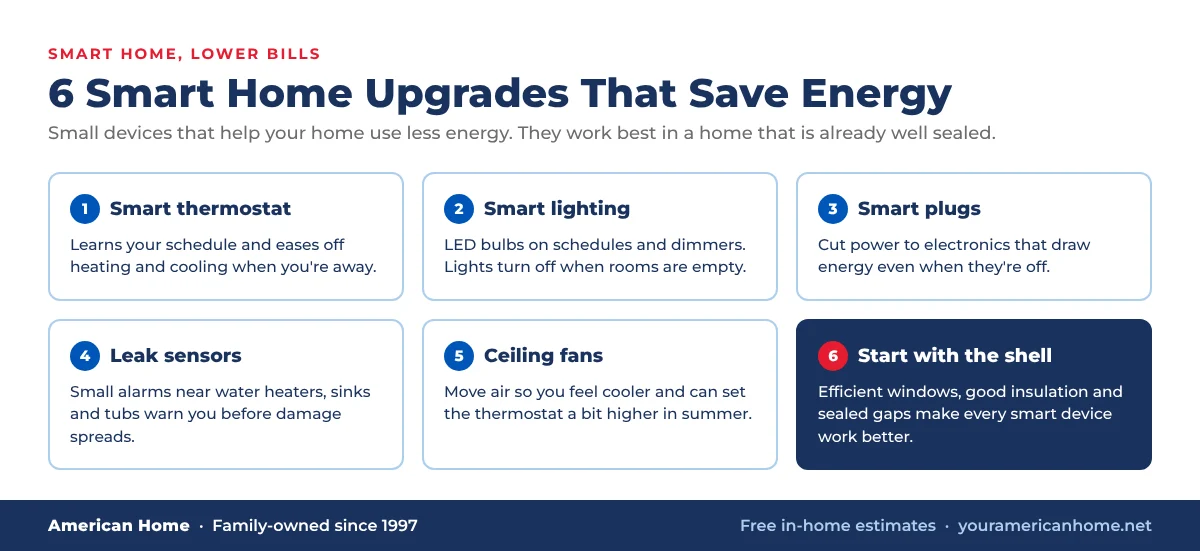
Six smart home upgrades that help your home use less energy.
Smart Home Upgrades That Save the Most Energy
Heating and cooling are usually the biggest energy users in an East Tennessee home. That is why the thermostat is the best place to start. After that, lighting, plugged-in electronics and water damage prevention are the next areas to target. The chart above shows six smart home upgrades worth a look.
Smart Thermostats
A smart thermostat learns your schedule and adjusts the temperature when you are asleep or away. Many models use your phone’s location to know when you leave and come home. You can also change settings from anywhere, which is handy if you forget before a trip.
Look for one that works with your heating and cooling system. Heat pumps, which are common in our area, need a thermostat that supports them. ENERGY STAR’s smart thermostat page lists certified models and explains what to look for.
Smart Lighting
Switching to LED bulbs is one of the easiest smart home upgrades. Smart bulbs and switches add schedules, dimming and motion sensors. Lights can turn off on their own when a room is empty, and outdoor lights can come on only at dusk.
Start with the rooms you use most, like the kitchen and living room. Motion sensors work well in closets, garages and laundry rooms where lights often get left on.
Smart Plugs and Power Monitoring
Many electronics draw power even when they are off. TVs, game systems, chargers and coffee makers are common examples. Smart plugs let you cut that power on a schedule or with a tap on your phone.
Some smart plugs also track how much energy each device uses. That helps you spot the biggest energy users in your home. Whole-home energy monitors that attach at the electrical panel give an even bigger picture, but they should be installed by a licensed electrician.
Smart Shades
Sunlight through windows can heat a room fast in summer. Smart shades can close on their own during the hottest part of the day and open again in winter to let in free heat. They work best on large, sunny windows facing south or west.
Even regular shades help if you use them well. The smart part just means you don’t have to remember.
Leak and Freeze Sensors
Leak sensors are small alarms that sit on the floor near water heaters, washing machines, sinks and toilets. If they sense water, they send an alert to your phone. Some models also warn you when temperatures drop near freezing, which helps protect pipes in crawlspaces.
These sensors don’t save energy directly, but they can prevent costly water damage. Catching a small leak early can save you from mold, rot and big repair bills. Our guide on how to prevent water damage explains why speed matters.
Smart Ceiling Fans and Ventilation
Ceiling fans make a room feel cooler, so you can set the thermostat a few degrees higher in summer. Smart fans can turn on with the thermostat or on a schedule. Remember that fans cool people, not rooms, so turn them off when you leave.
Smart bath fans with humidity sensors turn on when you shower and off when the air is dry. That helps control moisture without wasting energy.
Smart Home Upgrades Work Best in a Tight Home
Think of your home’s shell as a cooler. Smart devices help manage what’s inside, but the cooler has to be sealed well first. If cold air leaks in around windows in winter, or attic heat pours down in summer, your system will keep running no matter how smart the thermostat is.
That is why it makes sense to check the basics before you spend a lot on gadgets:
- Windows: Old, drafty or foggy windows let air and heat pass through. Efficient replacement windows with Low-E glass make a big difference.
- Attic and roof: Good insulation and attic airflow keep summer heat out. Our roofing team can check ventilation during a roof estimate.
- Walls and siding: New siding over a proper house wrap blocks wind and moisture.
- Air leaks: Caulk and weatherstrip gaps around doors, outlets and pipes.
Smart Home Upgrades for Older Homes
Many Maryville homes were built long before smart tech existed. That is fine. Most smart home upgrades work with older wiring and systems, but a few need extra care. Smart switches often need a neutral wire, which some older homes don’t have in every box. Older heating systems may need an adapter for a smart thermostat.
Check the product’s requirements before you buy, and call a licensed electrician for anything beyond plugging in a device. Older homes also tend to leak more air, so the shell work below often makes an even bigger difference there.
Common Mistakes to Avoid
Smart devices are easy to buy, but a few missteps can waste money:
- Buying devices that don’t work with each other or with your phone
- Setting a smart thermostat and then overriding it every day
- Running ceiling fans in empty rooms
- Ignoring drafty windows and a thin attic
- Skipping updates, which can leave devices less secure
Pick one system or app if you can, and add devices a few at a time. That keeps your smart home upgrades simple to use and easy to manage.
How to Plan Your Smart Home Upgrades
- Start with the thermostat. It has the biggest effect on your energy use.
- Swap to LED lighting. Add smart controls in the rooms you use most.
- Add smart plugs to electronics. Target TVs, game systems and office gear.
- Protect against leaks. Place sensors near water heaters and appliances.
- Fix the shell. Plan window, roof or siding work for the biggest long-term gains.
Are Smart Home Upgrades Worth It?
For most homes, yes, as long as you start with the right ones. A smart thermostat and LED lighting pay off for almost everyone because they cut waste every single day. Leak sensors are cheap peace of mind. Smart shades and whole-home monitors make the most sense for larger homes or people who enjoy tracking their energy use.
The key is to buy for a real need, not just because a device is new. Ask yourself what problem it solves. If you can’t answer that, skip it and put the money toward sealing your home instead. That way, every one of your smart home upgrades has a clear job.
Make Your Maryville Home More Efficient
American Home has served East Tennessee since 1997, with more than 15,000 projects completed. We help homeowners in Maryville and across Blount County tighten up their homes with replacement windows, roofing and siding. Estimates are free, and financing options are available for qualified homeowners.
Smart Home Upgrades FAQs
What smart home upgrades save the most energy?
A smart thermostat usually saves the most because heating and cooling use the most energy. LED smart lighting and smart plugs are next.
Do smart thermostats work with heat pumps?
Many do, but not all. Check that the model supports heat pumps before you buy, since heat pumps are common in East Tennessee.
Are leak sensors worth it?
Yes. They are low cost and can alert you to a leak early, which helps prevent water damage, mold and costly repairs.
Why do smart devices work better in a tight home?
If air leaks through old windows or a thin attic, your system keeps running no matter how smart the thermostat is. Sealing the home first lets smart devices do their job.
Can American Home help make my home more efficient?
Yes. We install replacement windows, roofing and siding that help seal your home. Estimates are free in Maryville and across Blount County.
Pair Smart Tech With a Tight Home
Schedule a free estimate with American Home.