
Energy efficient upgrades can make your Maryville home more comfortable and help lower your monthly bills. But not every upgrade gives you the same return. Some fix big problems for a small cost. Others cost more and make the most sense once the basics are done.
This guide ranks the most useful energy efficient upgrades for East Tennessee homes, from the simple fixes to the bigger projects. It also explains where to start if you can only do one or two things this year.
Quick answer: Seal air leaks and add attic insulation first. Then replace old, drafty windows, improve your roof and attic airflow, and consider new siding with a proper house wrap. Finish with smart controls and efficient lighting.
Planning Energy Upgrades in Maryville?
Get a free estimate on windows, roofing or siding.
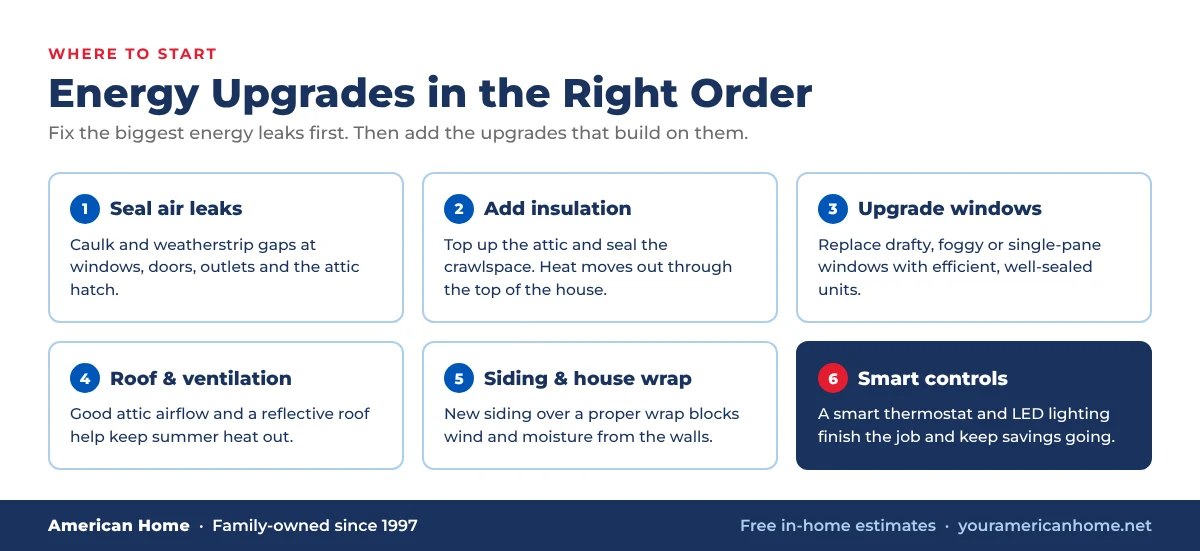
A simple order for energy upgrades that works for most homes.
Signs Your Home Needs Energy Efficient Upgrades
Your home often tells you when it is wasting energy. Watch for these clues:
- Some rooms are always too hot or too cold
- You feel drafts near windows, doors or outlets
- Your heating and cooling system runs almost nonstop
- Upstairs rooms get very hot in summer
- You see condensation on windows or frost in the attic
- Your bills climb even though your habits haven’t changed
If you notice several of these, start with the first steps in this guide. Small fixes often make a big difference in comfort.
Why the Order of Energy Efficient Upgrades Matters
Your home works as one system. Heat moves from warm places to cool places, through gaps, walls, windows and the roof. If you upgrade your heating and cooling system but leave big air leaks in place, the new system still has to fight those leaks every day.
That is why the order matters. Fix the places where energy escapes first. Then upgrade the parts that work best in a tight home. The chart above shows a simple order that works for most Maryville homes.
1. Seal Air Leaks
Air leaks are often the cheapest problem to fix and one of the biggest sources of waste. Common leak spots include gaps around windows and doors, outlets on outside walls, plumbing and wiring holes, the attic hatch and the rim joist in the crawlspace or basement.
Caulk, spray foam and weatherstripping seal most of these gaps. Many are simple DIY jobs. For a full picture, an energy audit can use a blower door test to find hidden leaks. This is one of the easiest energy efficient upgrades you can make.
2. Upgrade Attic Insulation and Ventilation
Heat rises, so a poorly insulated attic lets winter heat escape through the roof. In summer, a hot attic pushes heat down into your living space. Many older homes in Blount County have far less attic insulation than today’s homes.
Adding insulation is a good next step. The Department of Energy’s insulation guide explains the different types and how much you may need. Good attic airflow matters too. Soffit and ridge vents let heat and moisture escape so the attic stays drier and cooler.
3. Replace Old or Failing Windows
Old windows can be a major source of drafts and heat gain. Single-pane glass, foggy double-pane units, rotted frames and sashes that don’t close tightly all waste energy. New windows with Low-E glass and good seals keep more heat in during winter and out during summer.
Windows cost more than sealing and insulation, but they also improve comfort, cut outside noise and make your home look better. If your windows are in good shape, focus on sealing them instead. If they are failing, replacement windows are one of the most noticeable energy efficient upgrades.
4. Improve Your Roof
Your roof takes the full force of the summer sun. Lighter shingle colors and metal roofs reflect more heat than dark roofs. When you replace your roof, it is also the perfect time to improve attic ventilation and fix any gaps at the roof deck.
A roof replacement isn’t usually done just to save energy. But if your roof is near the end of its life, choosing a cooler roof and better ventilation adds energy savings to a project you need anyway. Learn more about our roofing services.
5. Add House Wrap and New Siding
Siding is your home’s first defense against wind and rain. When old siding is removed, the walls can be wrapped with a weather-resistant barrier before new siding goes on. That house wrap blocks drafts and helps keep moisture out of the walls.
Some siding products also come with insulated backing. If your siding is cracked, warped or due for replacement, pairing it with a good house wrap is one of the smartest energy efficient upgrades. See our siding options.
6. Maintain or Upgrade Your Heating and Cooling
Change filters regularly and have your system serviced each year. A clean, well-tuned system runs better and lasts longer. If your system is old, a high-efficiency heat pump may be worth a look. Talk to a licensed HVAC company about options and sizing.
Upgrading your system after you seal and insulate often means you can buy a smaller, less costly unit. That is another reason to follow the order in this guide.
7. Add Smart Controls and Efficient Lighting
A smart thermostat adjusts temperatures when you are asleep or away. LED bulbs use far less energy than old bulbs and last much longer. Smart plugs cut power to electronics that draw energy even when off. These are simple, low-cost steps. Set the thermostat a few degrees higher in summer and lower in winter for easy savings. Our guide to smart home upgrades covers them in more detail.
8. Control the Sun and Save Water
Shades, blinds and window film on sunny west-facing windows can cut summer heat gain. Shade trees on the west and south sides of the house help too. Inside, low-flow shower heads and faucets save water and the energy used to heat it.
These steps cost little and add up over time. Close blinds on hot afternoons, open them on sunny winter days, and fix dripping faucets right away. Every bit of heat you keep out in summer is heat your AC doesn’t have to remove.
Do Energy Efficient Upgrades Add Value?
Many energy efficient upgrades also make your home more appealing to buyers. New windows, a newer roof and fresh siding stand out in a listing and in photos. Buyers like knowing the big systems are in good shape. Lower energy use and a more comfortable home are easy selling points.
Keep records of what you upgrade, including product labels and dates. That paperwork helps you show the value of your energy efficient upgrades when it is time to sell.
Where to Start With Energy Efficient Upgrades
If you are on a tight budget, start with air sealing and attic insulation. If you already have major projects coming up, like a new roof or windows, choose efficient options when you do them. Here is a simple way to plan:
- This month: Seal gaps, change HVAC filters and switch to LED bulbs.
- This year: Add attic insulation and a smart thermostat.
- Next big project: Replace failing windows, roof or siding with energy in mind.
Our cost estimate calculator can help you budget for larger projects.
Energy Efficient Upgrades in Maryville
American Home has served East Tennessee since 1997, with more than 15,000 projects completed. We install replacement windows, roofing and siding that help homes in Maryville and across Blount County stay comfortable year-round. Estimates are free, and financing options are available for qualified homeowners.
Energy Upgrade FAQs
What energy efficient upgrades should I do first?
Start by sealing air leaks and adding attic insulation. They cost the least and often make the biggest difference. Then move to windows, roofing and siding.
Are new windows worth it for energy savings?
If your windows are old, drafty, foggy or rotted, new windows can improve comfort and cut energy waste. If they are in good shape, sealing them may be enough.
Does a new roof save energy?
A roof replacement is a good time to choose a cooler roof color or metal roof and improve attic ventilation. Both help keep summer heat out of the house.
What is house wrap?
House wrap is a weather-resistant barrier installed on the walls under the siding. It blocks drafts and helps keep moisture out of the walls.
Does American Home do energy efficient upgrades?
We install replacement windows, roofing and siding with house wrap. Estimates are free in Maryville and across Blount County.
Get a Free Estimate
Find out which upgrades make the most sense for your home.