

Deck installation is one of the most practical ways to add living space to a Maryville home. A new deck gives you room to grill, eat outside and enjoy the view of the Smokies on a clear evening. Before you build, two choices matter most: what the deck is made of and how it is built.
Quick answer: Pick decking based on how much upkeep you want. Pressure-treated wood costs least up front, while composite and PVC need far less care. Then make sure the deck installation includes a permit, deep footings, a bolted and flashed ledger, and code-built stairs and railings.
Here is a plain-language guide to deck materials and the installation process for Blount County homeowners.
Planning a deck installation in Maryville?
Get a free in-home estimate and compare materials, with financing options for qualified homeowners.
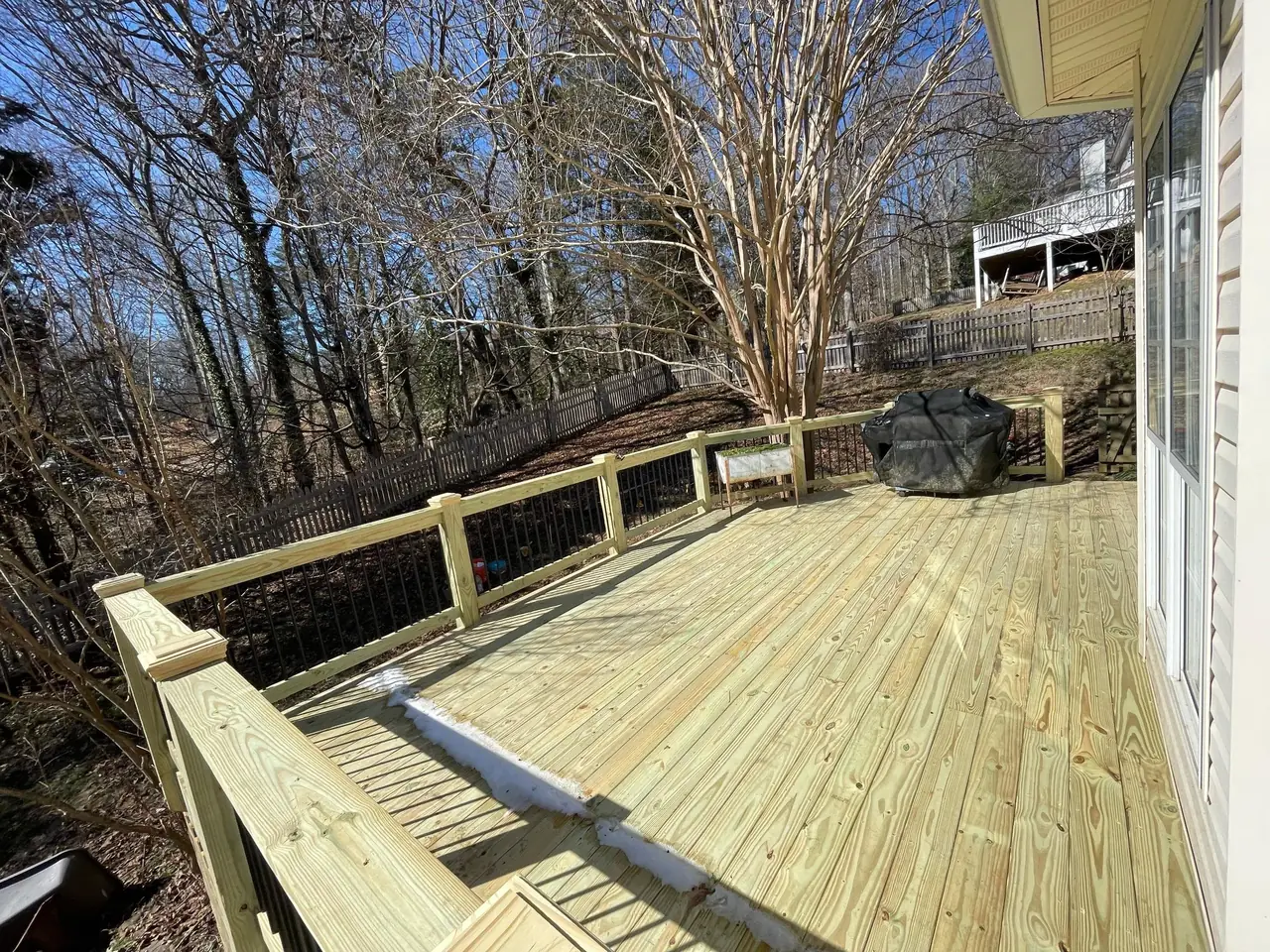
New pressure-treated deck boards and railing. Wood is the most budget-friendly choice but needs sealing every few years.
Deck Materials at a Glance
Each decking type has its own mix of cost, care and looks. This table gives a quick comparison. Costs are shown from lowest to highest, since actual prices depend on size, design and the specific product.
| Decking | Up-front cost | Maintenance | Best for |
|---|---|---|---|
| Pressure-treated pine | Lowest | Clean and seal every 1 to 3 years | Budget decks, classic wood look |
| Cedar | Moderate | Regular sealing to keep its color | Natural beauty, smaller decks |
| Composite | Higher | Occasional washing | Low maintenance, many colors |
| PVC (cellular vinyl) | Highest | Occasional washing | Wet or shady areas, lowest upkeep |
Think about how long you plan to stay in your home. If you will be there for many years, lower upkeep can be worth a higher price at the start.
Composite vs. Wood for Your Deck Installation
This is the question we hear most in Maryville. Both can make a great deck. The right answer depends on your budget, your yard and how much time you want to spend on care. Here is how each type of board holds up in East Tennessee. Keep in mind that the frame under almost any deck is wood, so the choice here is mainly about the boards you walk on.
Pressure-Treated Wood
Pressure-treated pine is the most common decking and framing material in our area. The wood is treated to resist rot and bugs. It is affordable and strong. But it needs regular cleaning and sealing to prevent cracking, splintering and gray, weathered boards. Even on composite decks, the frame underneath is usually pressure-treated lumber.
Cedar
Cedar has a natural resistance to rot and insects and a warm, rich color. It is softer than pine, so it can dent and scratch. It also needs regular sealing to keep its color, or it will fade to silver-gray. It usually costs more than pressure-treated pine.
Composite Decking
Composite boards blend wood fibers and plastic, often with a protective outer shell. They resist rot, splinters and fading, and they never need staining. They cost more up front. Many homeowners feel that is worth it to skip years of sealing and board repairs, especially in humid Blount County summers.
PVC Decking
PVC boards have no wood at all. That makes them very resistant to moisture, mold and insects. They are a strong pick for shady, damp yards and for decks around hot tubs and pools. They are usually the highest-cost option. PVC boards also clean up easily with soap and water, which helps around a pool or hot tub where splashes are common.
Choosing Railings
Railings are about safety first, then style. They also take more weather than you might think, since rain hits them from every side. Pair your decking with a railing that matches your upkeep goals.
- Wood railings: classic and budget-friendly, but they need sealing like the deck.
- Composite or vinyl railings: low upkeep and a clean look.
- Aluminum railings: strong, low upkeep and sleek, often in black.
- Cable rail: thin steel cables that keep the view open.
All railings must meet code for height and strength. Ask how the railing posts will be attached, since that is where many older decks get wobbly.
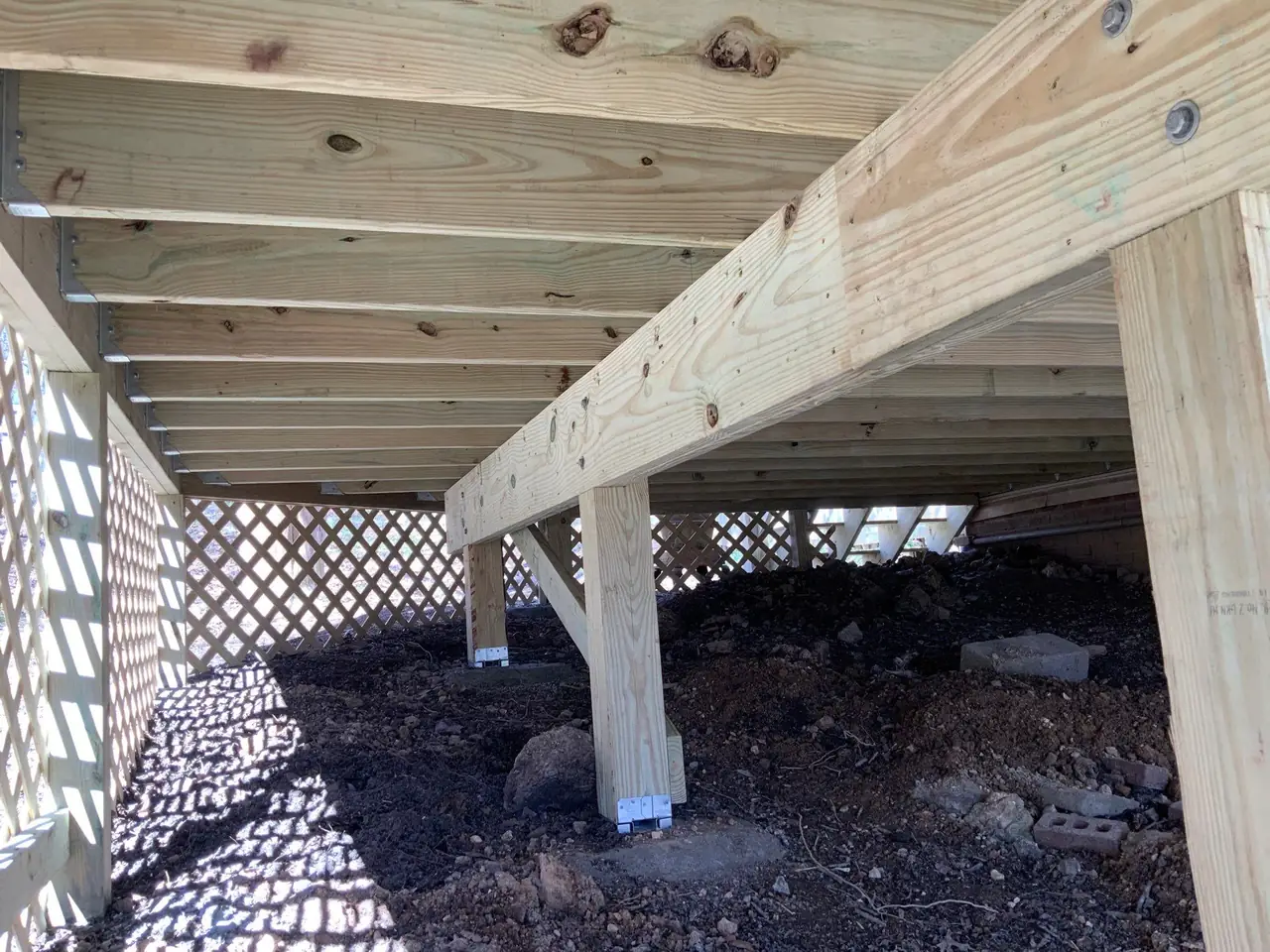
Solid framing and footings are what make a deck last.
The Deck Installation Process, Step by Step
Knowing the steps helps you plan and ask good questions. A typical deck installation follows this order.
- Design and estimate: size, shape, materials, stairs and railings are planned around how you will use the deck.
- Permit: most decks need a building permit, with inspections along the way.
- Layout and footings: holes are dug below the frost line and filled with concrete to carry the deck load. Footings are the concrete bases under each post.
- Ledger and framing: the ledger board is bolted to the house and sealed with flashing, metal strips that keep water out. Posts, beams and joists go in next.
- Decking: boards are installed with gaps for drainage and expansion, often with hidden fasteners.
- Stairs, railings and skirting: built to code for safety and finished for looks.
- Final inspection and walkthrough: the inspector signs off, and you check every detail.
The steps you cannot see, like footings and the ledger, matter most. They decide whether a deck stays safe for decades.
Planning for Maryville Lots and Weather
Many Blount County homes sit on rolling or sloped lots. A deck on a slope needs taller posts and more bracing, the diagonal boards that stop swaying. Red clay soil holds water, so drainage around footings matters too.
Our weather adds its own needs. Humid summers can grow mildew on shady decks. Heavy spring rain tests every joint and connection. Fall leaves pile up between boards. Plan gutters so they never drain onto the deck. If you want shade, ask about a covered section or a pergola during your deck installation, not after.
Questions to Ask Your Deck Builder
Good questions help you compare contractors and spot shortcuts. Here are the ones we suggest every homeowner ask before deck installation begins.
- Will you pull the permit and schedule the inspections?
- How will the ledger be attached and flashed?
- How deep will the footings go?
- What joist spacing and fasteners will you use for my decking?
- What warranties cover the materials and the work?
- Who do I call if I have a question during the build?
You can also check that a contractor is licensed in Tennessee using the Tennessee Board for Licensing Contractors site.
How Long Does Deck Installation Take?
Every project is different. Design and pricing often move quickly. Permits, material lead times and weather add time before and during the build. A simple deck on a flat yard goes faster than a tall, multi-level deck on a slope.
If you want your deck ready for summer, start planning in winter or early spring. That gives time for permits and ordering materials before the busy season.
Caring for Your Deck After Installation
A new deck still needs a little care to stay looking new. The good news is that the first year sets the tone. Start a few simple habits right after your deck installation and they will become easy.
- Sweep leaves and pollen off the boards often, and clear the gaps between them.
- Wash the deck once or twice a year with a cleaner made for your decking.
- Seal wood decks when water stops beading on the surface.
- Walk the deck each spring and check railings, stairs and screws.
Our deck maintenance guide walks through a full seasonal plan.
How American Home Helps With Deck Installation
American Home is family-owned and has served East Tennessee since 1997, with more than 15,000 projects completed. We design and build decks, covered decks, screen rooms and sunrooms in Maryville and across Blount County.
We start with a free in-home estimate. We compare wood and composite options for your home and give you a clear price. Financing options are available for qualified homeowners. See our deck building services, our Maryville page and our Blount County page. For layout ideas, read our deck design tips.
Deck Installation FAQs
How long does deck installation take?
It depends on the size, design and site. Permits and material lead times often add time before the build starts. Sloped lots and multi-level decks take longer than simple ground-level decks.
Is composite better than wood for a Maryville deck?
Composite costs more up front but needs much less care. Wood costs less but needs cleaning and sealing every one to three years. Many homeowners pick composite to save time on upkeep.
Do I need a permit for deck installation in Blount County?
Most decks need a building permit, with inspections of the footings and framing. Your contractor should pull the permit and schedule the inspections.
What is a ledger board?
The ledger is the board that attaches the deck to your house. It must be bolted to the house frame and sealed with flashing to keep water out of the wall.
Can I put a composite deck on an old frame?
Sometimes. The frame must be solid and the joists spaced right for composite boards. A contractor should inspect the frame before new boards go on.
Get a free deck estimate
We will compare wood and composite options for your deck and give you a clear, no-obligation price.