

Cold drafts can make a room feel chilly even when the thermostat says it should be warm. In East Tennessee, winter brings damp cold and sudden cold snaps, so drafts show up fast. They also make your heating system run longer than it needs to.
Quick answer: Most cold drafts come from many small gaps around windows, doors, the attic, and outlets. Seal the easy gaps yourself, and replace worn-out windows or siding when the leaks come from the house itself.
This guide shows you where drafts hide, how to find them, which fixes you can do this weekend, and when it’s time for bigger upgrades.
Tired of cold drafts?
Get a free, no-obligation estimate for new windows or siding from American Home.
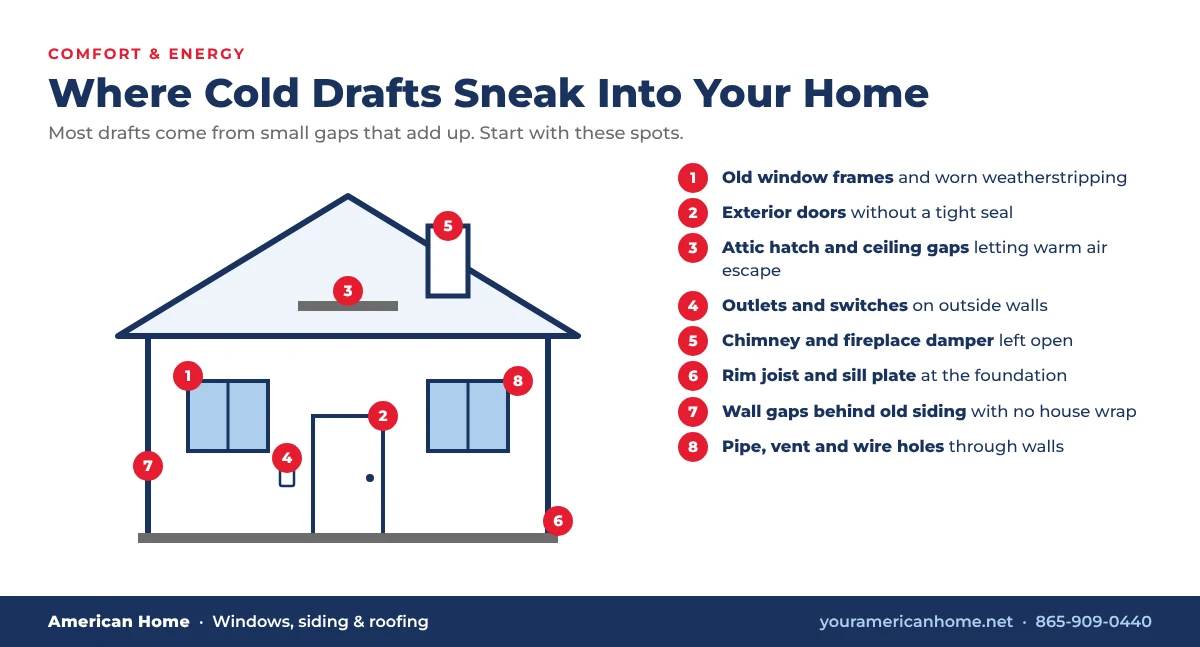
Drafts often sneak in at windows, doors, the attic, and outlets.
Why Cold Drafts Matter More Than You Think
A draft isn’t just a little breeze. It’s warm air you paid to heat slipping outside, with cold air pulled in to take its place. Your heat pump or furnace then works harder to keep up. Rooms near the leak never quite feel cozy.
Drafts can also bring moisture. In our humid climate, damp outside air that leaks into walls can lead to condensation, rot, and mold over time. That’s why sealing leaks helps your comfort and protects your home at the same time.
Where Cold Drafts Come From
Most drafts aren’t one big hole. They’re lots of small gaps that add up. Here are the most common spots in East Tennessee homes:
- Windows: worn weatherstripping, failed caulk, and loose or single-pane sashes
- Exterior doors: gaps at the threshold and around the frame
- The attic: open attic hatches, recessed lights, and gaps where walls meet the ceiling
- Outlets and switches on outside walls
- Fireplaces: a damper left open or one that doesn’t seal
- The rim joist: the wood band where the house sits on the foundation
- Outside walls in older homes built without house wrap or wall insulation
- Pipes, vents, and wires that pass through walls and floors
Older ranch homes and split-levels around Knoxville often have several of these at once. That’s normal. The goal is to find the biggest ones first.
Why Older Homes Feel Draftier
Many homes built before the 1990s went up with less insulation and no air barrier behind the siding. Over the years, wood shrinks, caulk dries out, and the house settles. On hilly lots, settling can even pull window frames a little out of square.
All of that opens tiny cracks. That’s how cold drafts start. One crack is no big deal. Dozens of them can feel like leaving a window cracked open all winter.
How to Find Cold Drafts in Your Home
The best time to hunt is a cold, windy day. The wind pushes air through gaps so you can feel it. Try these simple checks:
- Hold the back of your hand near window edges, door frames, outlets, and baseboards.
- Hold a lit incense stick near a gap and watch the smoke. If it wavers or blows sideways, you’ve found a leak. Keep it away from curtains.
- Close a door or window on a sheet of paper. If the paper slides out easily, the seal is weak.
- At night, have someone shine a flashlight around a closed door while you look from outside for light.
For the full picture, think about a professional energy audit. An auditor uses a blower door, a big fan that pulls air out of the house, to show every leak at once.
DIY Fixes for Cold Drafts
Many cold drafts can be fixed in an afternoon with supplies from the hardware store. These small jobs are cheap and often make a real difference:
- Replace worn weatherstripping on doors and windows
- Re-caulk gaps around window and door trim, inside and out
- Add a door sweep to the bottom of exterior doors
- Put foam gaskets behind outlet and switch covers on outside walls
- Weatherstrip the attic hatch and add a layer of insulation on top of it
- Close the fireplace damper when you aren’t using it
- Use draft stoppers at the base of doors to rooms you rarely heat
Start with the spots where you felt the most air. Then check again on the next windy day to see if the room feels better.
What DIY Can’t Fix
Caulk and weatherstripping only go so far. If a window is warped, rotted, or single-pane, new seals won’t stop the cold glass or the loose sash. If air leaks through the walls themselves, the problem is behind the siding. Those are signs it’s time to look at bigger upgrades.
It also pays to be honest about your time. If you’ve re-caulked the same window three winters in a row, the window is telling you something.
Bigger Upgrades That Stop Cold Drafts at the Source
When small fixes aren’t enough, these upgrades make the biggest difference. Each one targets a different part of the house, so the right pick depends on where your leaks are.
Think of your home as a box. Air sneaks in at the top through the attic, at the sides through windows and walls, and at the bottom near the foundation. You don’t have to fix every side at once. Start where you felt the most cold air during your draft hunt, and plan the rest over time.
Attic Air Sealing and Insulation
Warm air rises. In winter, a lot of it escapes through the attic. Sealing gaps around lights, pipes, and the hatch, then adding insulation, is often one of the most cost-effective comfort upgrades you can make.
The U.S. Department of Energy has a helpful guide to home insulation that explains the types and where they go. An insulation contractor or energy auditor can tell you how much your attic needs.
Replacement Windows
If your windows are single-pane, foggy, or loose, new windows stop drafts right where they start. Look for double-pane glass with a low-E coating, a thin layer that reflects heat, plus a well-sealed install. Gaps around the frame can undo a great window. Read more about energy-saving window installation.
New windows also feel warmer to sit near. The inside pane stays closer to room temperature, so you don’t feel that chill coming off the glass.
New Siding With House Wrap
Many older East Tennessee homes have no weather barrier behind the siding. When old siding comes off, a crew can add house wrap, a sheet that blocks air and water, and seal around every opening. Insulated siding adds another layer on top.
This is a big help for homes where cold drafts seem to come from the walls, not just the windows. Learn more about the benefits of new siding.
Cold Drafts and Humidity in East Tennessee
Our winters are often damp, not just cold. Damp air feels colder on your skin, so a small draft can feel worse here than in a dry climate. Moist air leaking into wall cavities can also cool, turn to water, and soak into wood and insulation.
That’s one more reason to seal leaks before they cause hidden damage. If you notice musty smells, stained drywall below a window, or peeling paint on sills, have someone check for water getting in along with the air.
Which Fix Should You Do First?
If money and time are limited, tackle cold drafts in this order:
- Do the cheap DIY fixes: weatherstripping, caulk, door sweeps, and outlet gaskets.
- Seal and insulate the attic.
- Replace the worst windows, often the ones that are foggy, rotted, or single-pane.
- Plan new siding with house wrap when your siding is near the end of its life anyway.
Our post on energy-efficient upgrades, ranked walks through more options and where each one fits.
When to Call a Pro About Cold Drafts
Call a pro when you’ve done the easy fixes and the room still feels cold. Also call if you see fog between panes, soft wood around windows, water stains on walls, or siding that’s cracked or loose. Those point to problems that seals alone won’t solve.
American Home has helped East Tennessee families since 1997, with more than 15,000 projects completed. We replace windows and siding across Knox, Blount, Anderson, Loudon, and Sevier counties. We’ll check where your cold drafts are coming from and give you a free, clear estimate. Financing options are available for qualified homeowners.
Cold Drafts FAQs
What causes cold drafts in a house?
Most cold drafts come from small gaps around windows, doors, the attic hatch, outlets, and pipes. Old caulk, worn weatherstripping, and settling all open up those gaps over time.
How do I find where drafts are coming from?
On a cold, windy day, feel around windows, doors, and outlets with the back of your hand. A lit incense stick also helps, since the smoke moves when air leaks through.
Can new windows stop drafts?
Yes, when the old windows are the problem. New double-pane windows with a tight, well-sealed install stop air leaks at the frame and the sash.
Is it normal to feel cold near windows in winter?
A little, with old single-pane glass. If you feel moving air, or the glass fogs between panes, the window is likely leaking or failing.
Does caulking really help with drafts?
It does for small gaps around trim. It cannot fix a warped sash, failed glass, or leaks inside the walls, so look at bigger fixes if drafts keep coming back.
Stop drafts at the source
We will check your windows and siding and give you a clear, no-obligation price.